

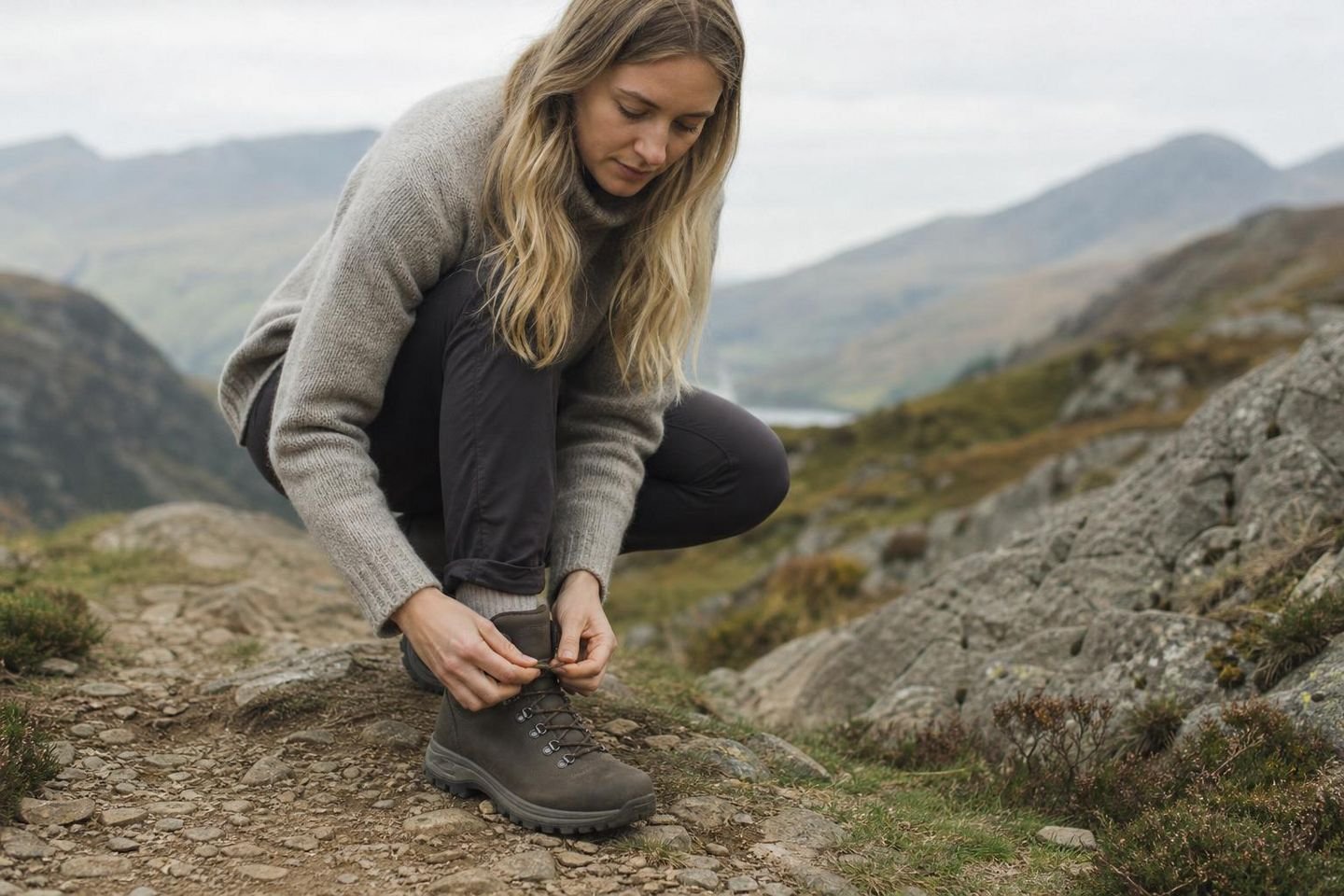

If the fit feels wrong in the shop, it won’t magically sort itself out on a hill.
That is the one rule I’d pin to the wall before anything else. Walking boots under £80 can get you onto muddy footpaths without swallowing your whole outdoor budget, but the price has a catch. You usually give up some long-term durability, plush cushioning or the neatest fit. Prices below are indicative UK figures and can change between retailers, so check the current price and exact model before buying.
Try them with the socks you’ll really wear. A bargain that rubs your heel on a rainy Tuesday is no bargain at all.
Cheap boots cut corners. Where, exactly?
Lower prices often mean simpler materials and less cushioning. That is perfectly fine for a two-hour woodland loop. But if you’re out every weekend, carrying a loaded pack or crossing rocky ground, a boot with stronger support and a tougher sole may be worth saving for, and spending up to £100 opens up more options (though price alone never makes a boot right for your feet).
Pay attention to the parts that shape your walk: how securely the heel sits, whether the toe box gives your toes space, and whether the tread suits your usual routes. Then think about care. Mud left to dry on the upper and boots stored damp can shorten the life of even a well-made pair, so clean them after muddy walks and follow the maker’s instructions.
For occasional walks, the best value is usually the pair that fits and matches your terrain, not the one with the longest feature list. Be honest about how far you’ll go, and take a few steps on a slope if you can.
What you actually get at this price
Expect a practical boot for day hikes and regular paths, not a technical mountaineering one. Waterproof claims vary: some models use a membrane, others just a water-resistant upper. On a wet Lake District route, that difference matters.
Fit comes first. Leave a little space ahead of your toes for descents and check that your heel doesn’t lift. Between sizes? Don’t guess from your trainers. And a waterproof boot can feel warmer than a breathable one on a sunny summer ramble.
Everyday trails and familiar paths
These suit local paths, parkland and moderate day walks. They make a sensible start if you want affordable boots for mixed, familiar ground rather than steep, rocky routes with a heavy pack.
Quechua NH100 Mid Waterproof Hiking Boots: A budget-friendly choice for gentle walks and first-time hikers, with a mid-height shape and waterproof design. They cope with damp footpaths, though the simpler build isn’t what I’d pick for frequent rugged hikes. Indicative price: £35.
Quechua MH100 Mid Waterproof Hiking Boots: A step up for walkers who want a waterproof mid boot for regular day outings. The design is aimed at straightforward hiking, but cushioning and support are everyday rather than premium. Indicative price: £45.
Regatta Holcombe IEP Mid Walking Boots: This popular style pairs a mid-cut shape with waterproof and breathable construction, which helps in changeable conditions. It may suit casual trail users well, though the fit won’t work for every foot and is worth checking in person. Indicative price: £60.
Will they keep the wet out?
For showers, wet grass and muddy bridleways, look for a waterproof membrane and a tongue that sits neatly against the upper. Even then, water can come in over the top, so gaiters are handy on longer, soggier walks. These are budget hiking boots for UK conditions, not a promise of dry feet in every downpour.
Regatta Samaris II Mid Walking Boots: A waterproof boot with a more supportive feel for day hikes on mixed paths. Worth a look if you want a boot for damp routes without stepping into a pricier category, although it can feel hefty for warm-weather strolls. Indicative price: £70.
Karrimor Bodmin 3 Weathertite Walking Boots: The Weathertite construction is meant to keep water out, and the mid-height profile suits ordinary countryside walking. It’s often sold cheaply, but feel and fit can be less refined than pricier footwear. Indicative price: £50.
Mountain Warehouse Adventurer Waterproof Walking Boots: A waterproof option for occasional walks and everyday use, with a straightforward design that keeps the price accessible. A new walker wanting one pair for local trails could be happy here, though regular long-distance hikers may want more cushioning and durability. Indicative price: £40.
Wide feet, easy fit
Wide feet don’t always need a special wide-fit label. They do need room across the forefoot without your heel sliding about. Try boots later in the day, when feet are a little larger, and walk down a ramp if the shop has one. Buying online? Check the returns policy before ordering two sizes.
Quechua MH500 Mid Waterproof Hiking Boots: A more capable-looking choice for hikers who want a waterproof mid boot for regular day routes. The shape may work for some broader feet, but fit is personal, so don’t treat that as a guarantee. Indicative price: £75.
Hi-Tec Eurotrek Lite WP Walking Boots: A lighter waterproof walking boot, which may appeal if chunkier boots tire you out. The lighter feel helps on gentler routes, but it may not give the robust underfoot protection you’d want on very rocky terrain. Indicative price: £70.
Ad: we may earn a commission when you buy through links in this article, at no extra cost to you. We choose what we cover on our own.
Frequently Asked Questions
Are walking boots under £80 good enough for regular day walks?
For most day walks on paths and moderate hills, yes. Expect simpler materials and less cushioning than pricier boots, so heavy packs and rocky ground wear them faster.
Will waterproof budget boots keep my feet dry in heavy rain?
Not always. Water can get in over the ankle opening, so gaiters help on long, soggy walks. A membrane helps, but it is no promise of dry feet in every downpour.
How should budget walking boots fit?
Leave a little room in front of your toes, keep the heel from lifting, and try them with the socks you will actually wear. Trying them later in the day helps too.
When is it worth spending more than £80?
If you walk every weekend, carry a loaded pack or cover rocky ground, stronger support and a tougher sole can be worth saving for.