

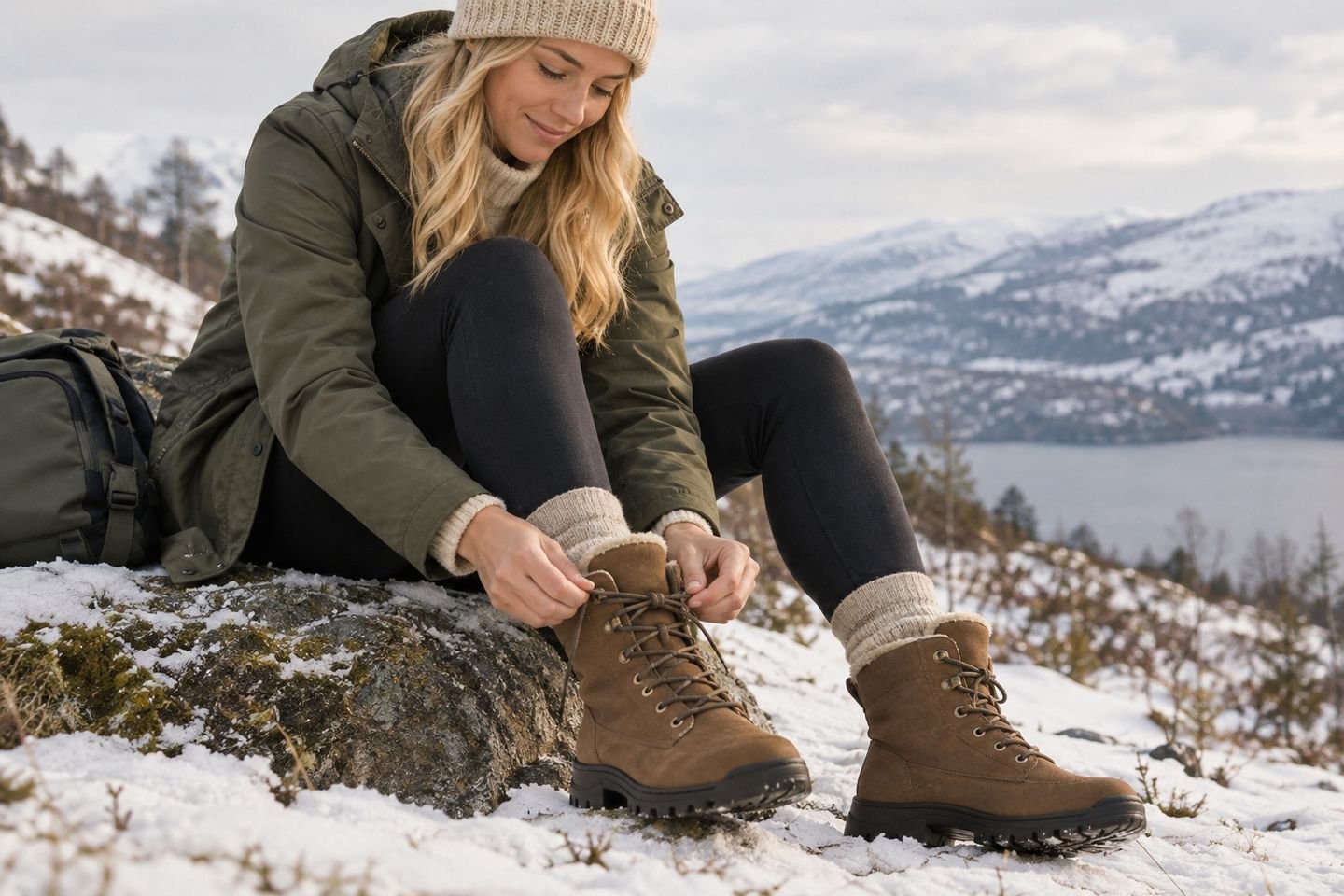

A delayed train on a frozen platform will tell you more about a pair of boots than any shop fitting ever could.
That is worth keeping in mind before you start browsing. The best winter boots are not the ones built for the biggest mountain. They are the ones that suit the weather you really get, whether that is rain, grit, slush or a cold walk home. I would start there. A boot that is brilliant in deep snow can feel clumsy on a crowded train.
Start with your actual week
Match the boot to your routine: city pavements, muddy dog walks or long waits at the bus stop. Then check the fit with winter socks and take a close look at the tread. Does it feel secure from the first outing? Does it suit what you normally wear? Those questions matter more than any label. There is no need to buy a boot for an imaginary blizzard if your real challenge is a rainy Tuesday commute.
Use the sections below to narrow things down, and treat each one as a starting point. Winter footwear varies a lot from one design to the next, so read the product’s own notes on waterproofing, insulation and care before you pay. Rugged lace-ups look good with straight-leg jeans, cosy snow boots suit weekend walks, and a neat Chelsea shape copes with the commute.
Men’s boots that don’t look like hiking kit
For everyday wear, men’s winter boots have to handle wet pavement without looking like specialist gear. A supportive footbed helps. So does a sole with clear tread, which is handy on slick city streets. If the boots go from office to pub, a clean leather-look finish is easier to dress up than a huge padded shaft.
Check where the boot bends when you walk. If the sole feels rigid across the forefoot, it may take a while to break in, so try it indoors first with the socks you plan to wear. Dark brown or black leather-effect boots pair well with wool trousers and a roomy coat. The small drawback is care. Smooth leather needs regular attention to look its best through road salt and rain.
Women’s boots that don’t swallow the outfit
Warm boots for women can be practical without taking over your look. A mid-calf shape gives extra coverage on chilly walks, while an ankle boot is often easier on busy days. This year’s cosy, outdoorsy style sits nicely with wide-leg denim and long coats, so your warmest pair doesn’t have to wait for a muddy trail.
Pay attention to the lining, because it changes the fit. Thick fleece can feel snug, especially with a heavier sock, so leave a little room at the toes. I like a pull-on style for quick trips outside, though some are less adjustable around the ankle than lace-ups (I found that out the hard way on a windy school run). If your wardrobe leans smart, try a simple leather Chelsea boot instead of a quilted snow boot.
Rain, slush and the UK reality
British winter usually means long spells of drizzle, puddles at crossings and slushy pavements, not dramatic snowdrifts. That is where genuinely waterproof construction earns its keep. Look for clear details about sealed seams or a waterproof membrane. Water-resistant leather alone may cope with a shower, but it is not the same promise.
Think about height too. A low ankle is comfortable and easy to style, but it won’t stop water splashing over the cuff. For slush, a gusseted tongue keeps dampness from creeping in through the laces. A quick wipe after a wet walk is worth the faff, since road grime left to dry can mark the uppers and make them look tired early.
Cold commutes are a different test
Standing around waiting is nothing like a brisk ten-minute walk. For cold commutes, insulation and comfort underfoot matter more than an expedition-style profile. Choose a lining that feels warm without making your foot sweat on a heated bus. Removable insoles are a nice bonus because you can air them out overnight.
Here is my slightly fussy commute test. Put the boots on with your usual socks and stand in them for a few minutes. Pressure at the toes or heel shows up fast, long before a full day makes it worse. Weight counts as well. A heavily insulated boot feels lovely outdoors but tiring if you are walking between several stops. Keep spare socks at work if your route often involves puddles. It is a small move that can rescue a damp afternoon.
Grip and lining, explained
Grip isn’t just about a chunky-looking sole. Check for deep, well-spaced tread and a rubber outsole. Closely packed grooves fill with mud, and a very hard sole can feel slick on wet surfaces. No footwear can promise to prevent every slip on ice, so slow down on frosty paving and take extra care on untreated paths.
Fleece and faux fur feel cosy straight away, while synthetic insulation tends to be lighter and easier to dry. The right pick depends on how long you will be outside and how warm your feet run. If you are browsing snow boots UK retailers stock, read the care instructions as well as the temperature claims. Wet linings need time to dry properly. Putting boots straight on a radiator can damage some materials.
My view: buy for the rainy commute, not the blizzard.
Ad: we may earn a commission when you buy through links in this article, at no extra cost to you. We choose what we cover on our own.
Frequently Asked Questions
Are water-resistant boots the same as waterproof boots?
No. Water-resistant leather may cope with a shower, but waterproof boots usually have sealed seams or a membrane. Check the product details for the exact claim.
How should I test the fit of winter boots?
Wear the socks you plan to use in winter, then stand in the boots for a few minutes. Pressure at the toes or heel shows up quickly, and you want a little room at the front.
Can I dry wet boots on a radiator?
It is best not to. Direct heat can damage some materials. Let wet linings dry slowly at room temperature and follow the care instructions.
What kind of sole grips best in winter?
Look for a rubber outsole with deep, well-spaced tread. No sole can promise to prevent every slip on ice, so take care on frosty paving.


