

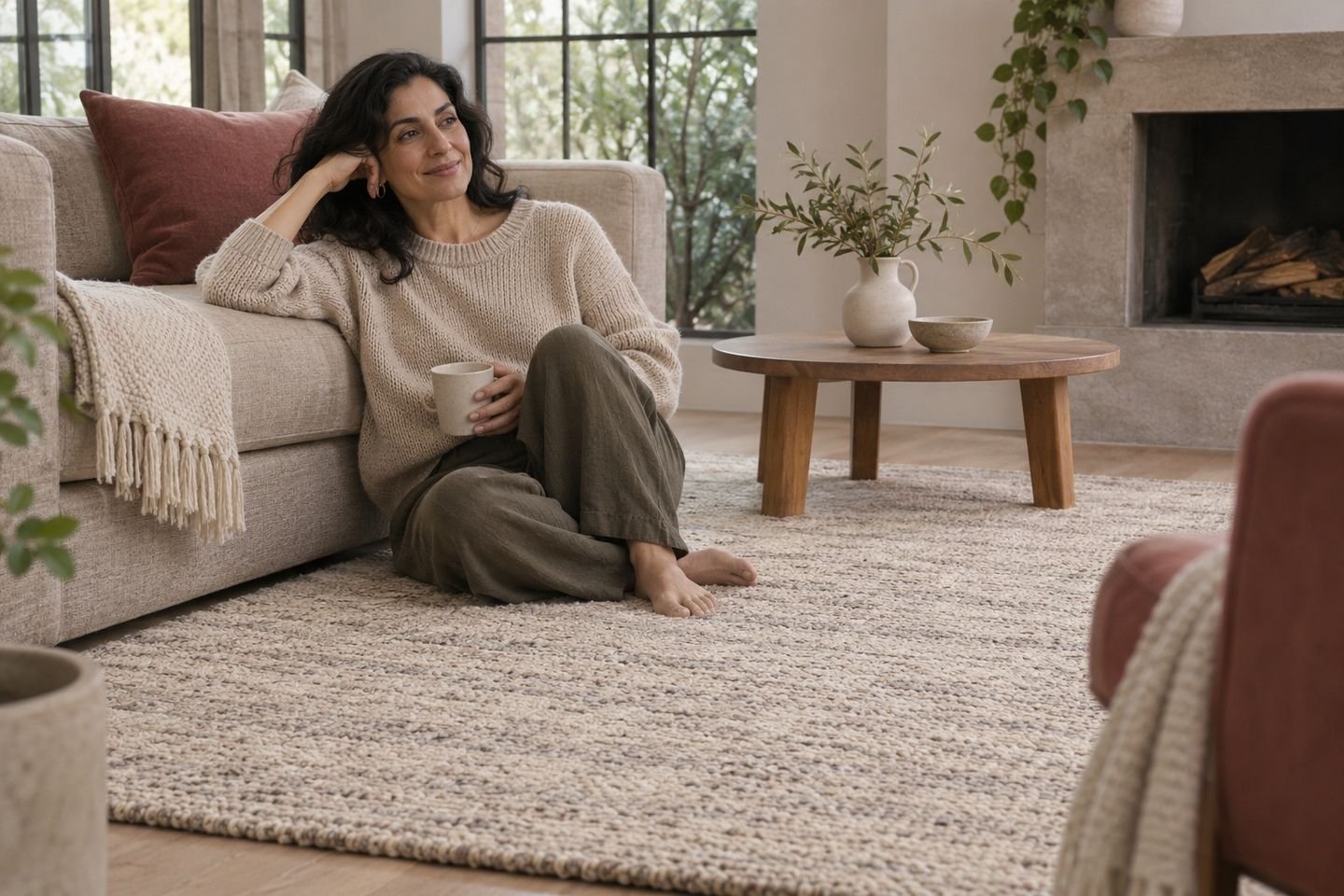

Tea spills and pale rugs don’t mix.
I learned that the hard way, on a cream rug, on a Sunday, with guests due in an hour. It’s why I now think the best wool rugs for a living room are the ones that match your real routine, not the ones that look perfect in a showroom photo. Measure first, decide how much pattern the room can take, then choose a pile and colour you won’t fret over every time someone walks in holding a mug. A good rug should make home feel more inviting. It shouldn’t turn you into a full-time spill monitor.
Why does wool suit a living room so well?
Wool feels warm underfoot and has a naturally textured look that sits happily on wood, stone or carpet. A tightly woven flatweave is usually easier to tuck beneath chairs than a deep pile, while a thick hand-tufted design makes a seating area feel properly cosy, the sort of spot you sink into with a blanket and don’t leave for hours. Check the care label before you commit, especially if your living room doubles as the snack-and-crafts zone.
Natural wool isn’t indestructible. It sheds, it marks if spills sit, and it needs more attention than many synthetic rugs. A rug pad limits slipping and cuts down wear underneath.
Below are five named rugs, grouped by budget, finish and room size. Prices are approximate UK guide prices because sizes and stock change, so check the retailer’s current listing first. Expect some fluff at the start (your vacuum will earn its keep).
Budget picks under £150
Sizes shrink at this price, so measure before falling for a pattern. A modest rug can still anchor an armchair and side table nicely, and it suits compact rooms or defined corners.
Dunelm Wool Berber Style Rug: This casual, patterned look works with a linen or cotton sofa and adds softness to hard flooring. It fits relaxed homes, but check the exact fibre content on the listing, as ranges and sizes vary. Approx. £80–£150.
Premium wool, if you’re sure
Spend more when the rug will be the centrepiece and the dimensions are settled. Premium designs lean on texture, craftsmanship or distinctive pattern. A higher price won’t make a pale rug immune to tea.
John Lewis Wool Herringbone Rug: Herringbone brings quiet pattern without fighting artwork or patterned upholstery. It’s a smart pick if you like classic details, though the restrained design may feel too subtle if you want a bold statement. Approx. £250–£600.
The White Company Wool Herringbone Rug: A refined, neutral herringbone suits calm, light-filled rooms and furniture with clean lines. It’s lovely for a grown-up sitting room, but pale tones need quick attention when anything gets spilled. Approx. £300–£700.
Big rugs for open-plan rooms
In an open-plan space, the rug has to tie the seating together rather than float like a tiny island. Lay masking tape on the floor first. Aim for at least the front legs of your sofa and chairs to sit on the rug. Large wool rugs cost more, yet the right scale makes the whole layout look deliberate.
John Lewis Classic Hand Knotted Berber Rug: A larger Berber-style rug can define a generous seating area while keeping the palette easy to work with. It looks practical for open-plan living, but shedding in the early weeks can be a nuisance. Approx. £300–£900, depending on size.
John Lewis Wool Herringbone Rug: A larger herringbone creates a tidy base for open-plan seating without a loud print. It’s best where texture matters more than colour, and its understated look won’t suit everyone. Approx. £350–£900.
Keeping it clean without panic
Vacuum regularly on suction only, or with the brush bar switched off if your machine allows it. New wool can shed loose fibres for a while, so don’t worry when the first few cleans pull up more fluff than expected. Skip aggressive scrubbing, which roughs up the fibres and spreads a mark.
For spills, blot straight away with a clean, absorbent cloth. Press gently from the outside of the spill towards the centre, and follow the maker’s care instructions before using any cleaner. Test a hidden patch first. For a large stain, or a rug labelled dry-clean only, call a professional instead of improvising with a bucket of water.
Rotate the rug every few months if one end gets more sun or foot traffic. Keep it away from prolonged damp, use a suitable underlay, and lift furniture rather than dragging it across the fibres. Small habits like these help a wool rug look good for years.
Ad: we may earn a commission when you buy through links in this article, at no extra cost to you. We choose what we cover on our own.
Frequently Asked Questions
Do wool rugs shed a lot?
New wool rugs often shed loose fibres for the first few weeks. Vacuum on suction only or with the brush bar off, and it usually settles down.
How do I clean a spill on a wool rug?
Blot straight away with a clean, absorbent cloth, working from the outside of the spill towards the centre. Check the care label before using any cleaner and test a hidden spot first.
What size wool rug suits an open-plan room?
Pick one big enough that at least the front legs of your sofa and chairs sit on it. Mark the area with masking tape before you buy.
Is a pricier wool rug worth it?
Often, if the rug is a focal point and you are sure of the size. Premium designs tend to offer better texture and craftsmanship, but pale ones still stain.