

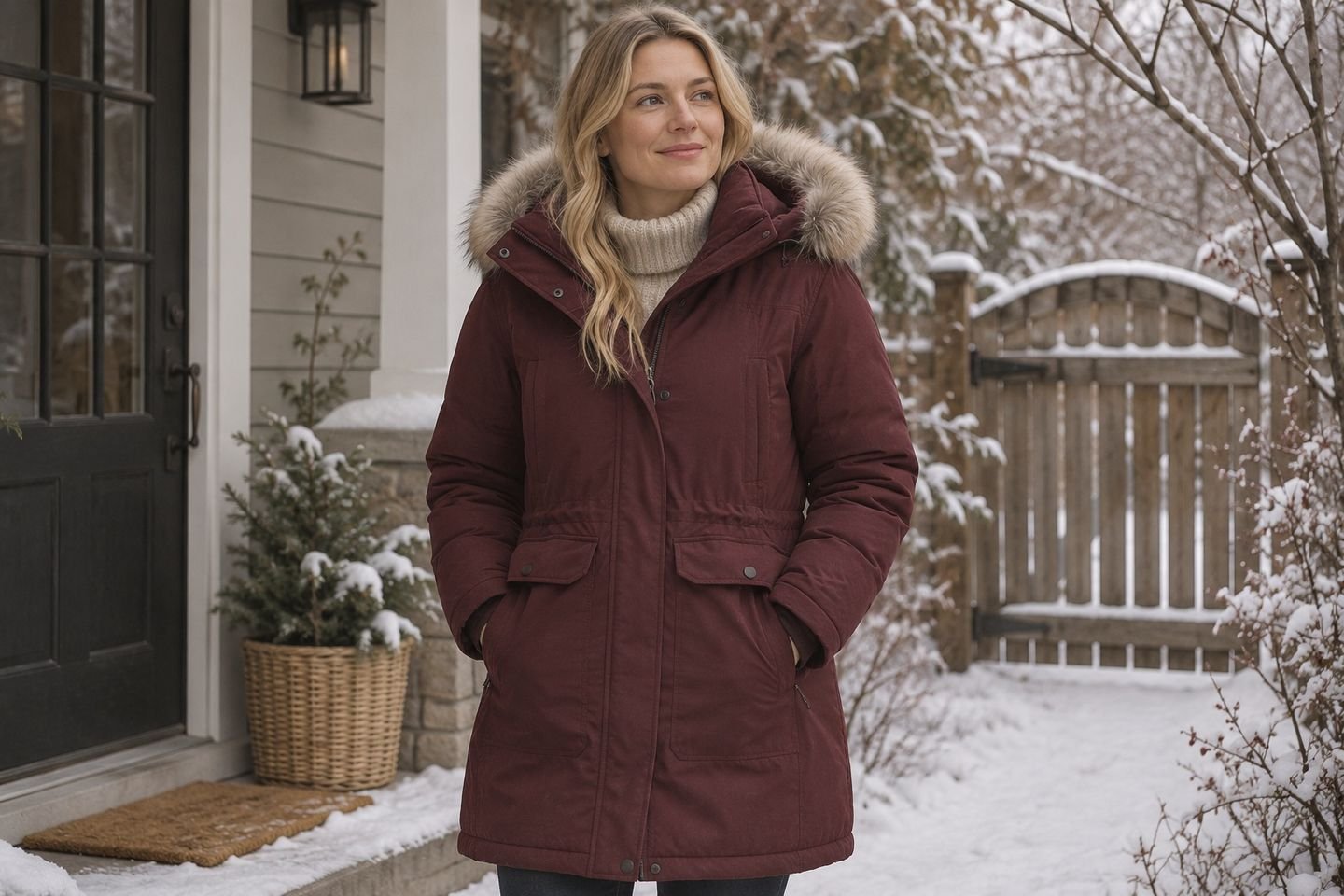

I once stood at a bus stop for forty minutes at -28°C in a coat that felt perfect indoors.
That was a mistake. The parka was fine for my usual commute, but it was the wrong tool for a long, still wait, and I spent the last ten minutes doing a sad little dance on the curb. Everything below comes from that lesson: the best winter parkas are the ones that match the cold you actually face, whether that is a windy walk to the subway at -12°C or a long wait in deep freeze. Prices here are approximate Canadian retail figures, and they shift by colour, season and retailer.
Why no two temperature ratings agree
Brands don’t share a test.
So a stated range is guidance for one particular product, not a promise that you’ll feel comfortable at that number. Fill power only describes the loft of the down, which is a long way from the full warmth of a coat. Down amount, construction, length, hood, wind protection and fit all count too, and a very warm parka can turn into a sweaty nuisance on a crowded train, while a commuter coat can feel thin when you’re standing around outside.
Think about how long you’ll be out, what you’ll wear underneath and whether you run warm or cold. For a short urban commute around -10°C to -20°C, a substantial insulated parka plus a warm mid-layer may be plenty. Past -25°C you want a longer cut, a protective hood and room to layer. And if you’re buying for outdoor work or long waits, your boots, mitts and face coverage matter as much as the coat (I learned that one with numb toes, not with a spreadsheet).
Sizing is where people slip. Size down for a sleek look and there’s no space for a sweater; size up too far and cold air moves around inside. Try the coat with the layers you’ll really wear. Temperature guidance also changes by model and over time, so check the current product page before you buy.
Everyday cold: -10°C to -20°C
These suit dog walks, errands and getting across town on a wet, windy afternoon. None of them is an expedition coat, and that’s the point.
THE SUPER PUFF LONG: Aritzia’s long puffer is a city-friendly pick if you want extra coverage over your thighs and a streamlined look. It suits people who bounce between outdoors and heated spaces, not people standing still for hours in deep cold. Expect about CAD $350, depending on the version. The fashion-forward fit may be awkward with bulky layers.
McMurdo Parka: The North Face McMurdo is a practical insulated option for everyday winter weather, with a longer shape and a hood. It’s a sensible buy if you want a recognizable outdoor brand without luxury pricing; roughly CAD $500. It can feel bulky indoors, and how warm it feels depends on your activity and layers.
Jackson Glacier Parka: Patagonia’s Jackson Glacier Parka brings a cleaner city look to cold-weather insulation, which suits regular errands and commutes. The approximate Canadian price is CAD $699. That’s more than a basic winter coat, and anyone facing prolonged extreme cold should check whether its warmth and coverage fit that use.
Therme Parka: Arc’teryx’s Therme Parka is built for urban winter, with weather protection and insulation in a more polished silhouette. At about CAD $1,100 it’s a premium choice for someone who’ll wear it constantly and likes a refined look. Steep. And not automatically the answer for standing outside in -30°C.
When it gets serious: -25°C to -30°C
At these temperatures wind and time outdoors change the math fast. A warm coat helps, but no parka replaces proper layers, insulated footwear and mitts. These picks lean toward heavier coverage, so use the maker’s current guidance and your own exposure to decide.
Expedition Parka: Canada Goose’s Expedition Parka is made for severe cold and has a long, substantial design. It’s aimed at people who spend extended time outdoors in demanding conditions, not someone crossing a parking lot. Plan on around CAD $2,000 or more, depending on the current version. It’s costly, and it can be far too warm for an active commute.
Snow Mantra Parka: The Canada Goose Snow Mantra Parka is another expedition-minded option for sustained exposure to very cold conditions. Long coverage and a protective design make it a serious dedicated cold-weather layer. Budget roughly CAD $2,000 to $2,500 and confirm the price before shopping. Weight and expense are the obvious downsides, and for ordinary city errands it’s overkill.
Therme SV Parka: Arc’teryx’s Therme SV Parka is the more protective, severe-weather sibling in the Therme family. It may suit someone who wants an insulated urban parka with a weather-focused build and expects cold, wet conditions. Roughly CAD $1,500. Still a major investment, and product-level warmth guidance doesn’t replace thinking about wind chill and how long you’ll be outside.
Canada Goose or Arc’teryx?
They take different approaches to premium outerwear. The Expedition feels more specialized for prolonged severe cold, while the Therme SV is shaped around a technical, city-ready style. A brand name alone won’t tell you which one feels warmer on your body.
Langford Parka: Canada Goose’s Langford Parka is a longer urban style for cold Canadian winters, with a less expedition-specific feel than the Expedition. It suits someone who wants a polished coat for regular city use, at an approximate Canadian price around CAD $1,800. That’s a lot for a daily parka, and it may run too warm when you’re moving quickly or indoors most of the day.
Check the current materials, length, hood design and fit on both brands’ product pages, then try each with your usual winter layers if you can. I’d pick by routine rather than a brand-versus-brand scorecard. A warm coat you wear comfortably beats an imposing one that spends half the winter in the closet.
Value is not the same as cheap
It means paying for the coverage and weather protection you’ll actually use. If your winter is mostly short walks and transit, a moderate parka may be a better buy than a heavy expedition model. Work outdoors? Then the calculation changes.
Before buying, check the return policy. Sit down in the coat, reach forward, zip it over a sweater. Look for a hood that stays put in wind and cuffs that work with your gloves. A parka that feels warm in a shop can behave very differently after an hour in damp, gusty weather, so think about your coldest regular day, not a once-a-year headline.
Don’t treat a temperature number as a guarantee, either. Brands base guidance on different assumptions, and activity level changes how warm you feel. If you’re outside for long stretches near -30°C, plan a full clothing system and follow local cold-weather safety advice.
My view: buy for your Tuesday, not your worst day on record, and rent or borrow the extreme gear if that day rarely comes.
We may earn a commission when you buy through links in this article, at no extra cost to you. We choose what we cover on our own.
Frequently Asked Questions
What temperature rating should I look for in a winter parka?
Match it to your real exposure. For short commutes around -10°C to -20°C, a solid insulated parka with a warm mid-layer is often enough. Below -25°C, look for a longer cut, a protective hood and room for layers. Brands do not share one test, so treat ratings as guidance only.
Does fill power tell me how warm a parka is?
No. Fill power describes the loft of the down. Total warmth also depends on how much down is used, construction, length, hood, wind protection and fit.
Is a Canada Goose parka worth the price?
It depends on your routine. The Expedition and Snow Mantra suit long exposure to severe cold. For short city commutes they can be too warm and too costly.
How should a winter parka fit?
Try it on over the sweater or layers you will actually wear. Too tight leaves no room for insulation, and too loose lets cold air circulate. Check that the hood stays put and the cuffs work with your gloves.