

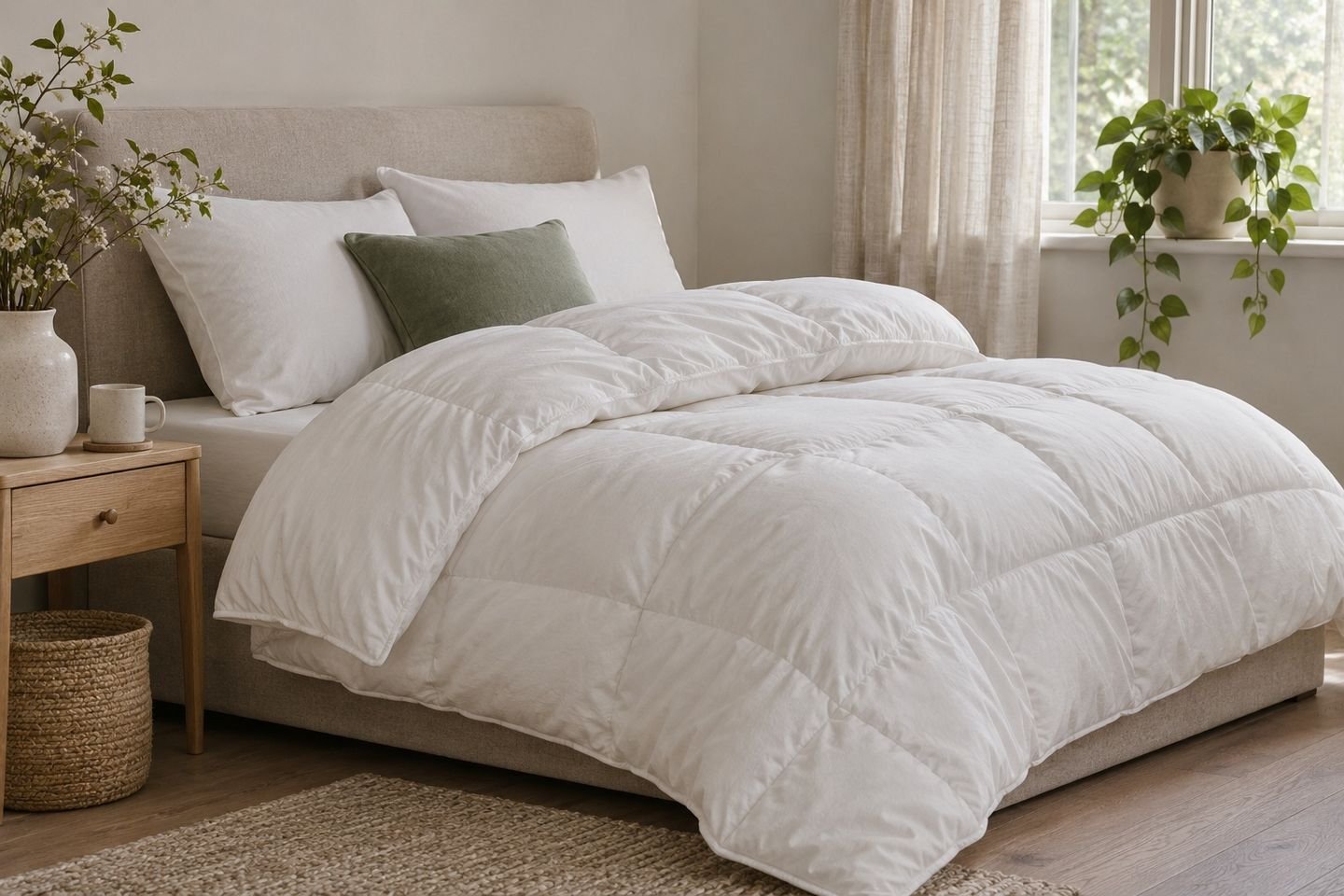

A 13.5 tog duvet in a well-heated bedroom is a mistake I have watched people make more than once.
Tog is about warmth. It tells you nothing about allergy protection, and that single point trips up a lot of buyers. A 4.5 tog duvet suits warmer conditions, 10.5 is the popular middle weight, and 13.5 is for colder rooms. Your heating, your nightwear and how you run hot or cold all matter too.
Why does the tog rating matter more than the price?
When I first looked at budget anti allergy duvets, I assumed the cheapest one was the smart buy. It wasn’t, because I picked the wrong weight for my room. Prices and stock change, and size makes a big difference, so treat every figure below as a guide price rather than a live quote. Check the current listing before you buy, especially if your £50 has to stretch to a double or king.
Everyday weight: the 10.5 tog picks
These are a sensible start if you want easy-care synthetic bedding. ‘Anti-allergy’ claims vary by product, so read the manufacturer’s wording and washing instructions instead of assuming every duvet works the same way. Prices are indicative starting prices, and larger sizes cost more.
Silentnight Anti Allergy 10.5 Tog Duvet: A mid-weight synthetic duvet that suits year-round use in a reasonably temperate bedroom. It’s a practical choice if you want a recognisable brand and a machine-washable style. The catch is that 10.5 tog may feel too warm in a stuffy room, or too light for a cold sleeper in winter. Guide price: about £20–£35, depending on size.
Slumberdown Allergy Protection 10.5 Tog Duvet: Another everyday-weight option for people who want a plain synthetic fill and easy care. Check the care label before washing, since size and model details can change what your machine can handle. It won’t give you the natural feel of down. Guide price: about £20–£35.
Fogarty Anti Allergy 10.5 Tog Duvet: Dunelm’s Fogarty range is worth a look if you’d rather shop at a familiar UK homewares retailer. The 10.5 weight is the useful middle ground for many homes, though price and availability vary by size and range. Guide price: around £20–£40.
Cheaper and lighter
If your ceiling is nearer £30, start with lighter tog ratings or a single size, then check the price for your exact bed. A low price says nothing about comfort. Look at the filling, dimensions and washing advice too. Lighter options suit a warm bedroom, or anyone who dislikes weight on top of them.
Silentnight Anti Allergy 4.5 Tog Duvet: A light duvet for summer, a warm bedroom, or layering with a blanket when the temperature dips. The appeal is obvious if you overheat at night. On its own, though, it probably won’t feel cosy through a cold UK winter. Guide price: about £15–£25.
Slumberdown Allergy Protection 4.5 Tog Duvet: This lightweight option suits warm sleepers and summer use. Synthetic fill is often picked for straightforward care, but read the label for the exact wash temperature and drying instructions. The trade-off is simple. You may need an extra layer in spring or autumn. Guide price: around £15–£25.
Fogarty Anti Allergy 4.5 Tog Duvet: A lower-tog choice for hot bedrooms or seasonal use, particularly if you like your bedding light. It’s less versatile as a single duvet across the whole year, and prices can shift with size. Guide price: approximately £15–£30.
For cold rooms
Silentnight Anti Allergy 13.5 Tog Duvet: A warmer synthetic option for winter or a bedroom that gets properly cold overnight. It may suit someone who likes a snug, substantial covering. It could be uncomfortable if you tend to wake hot. Guide price: around £25–£45, depending on size.
Slumberdown Allergy Protection 13.5 Tog Duvet: This higher-tog version is aimed at colder nights and sleepers who want more warmth from one duvet. Check its dimensions and washing instructions before purchase, especially if you’ll be laundering it at home. Its main drawback is the same as any warm duvet: it can be too much once the heating’s on. Guide price: about £25–£45.
Fogarty Extra Warm Anti-Allergy 13.5 Tog Winter Duvet: A warmer option from the Fogarty range if your room runs cold. Compare the care label and size-specific price with lighter alternatives. Higher tog won’t automatically make it the right choice for you. Guide price: roughly £25–£45.
Microfibre or hollowfibre?
Both are synthetic fills you’ll meet in budget duvets. Microfibre is made from fine fibres and tends to feel soft and fairly light, while hollowfibre has air pockets inside its fibres, which can make it feel loftier (though the exact feel depends on how the duvet is built). That is why the label’s description tells you more than the fibre name does.
Neither fill automatically prevents allergy symptoms. Look for a clear anti-allergy claim, follow the washing instructions and keep your bedding clean. If you’re comparing a hypoallergenic duvet in the UK, check whether the claim refers to the filling, a treatment, or both, and see what the manufacturer says about care. A washable duvet is handy for a sensitive sleeper. A bulky king-size one, on the other hand, may be awkward in a small machine.
Washing it without wrecking it
Start with the care label. It tells you whether the duvet can go in your machine, which cycle to use and how to dry it. Don’t force a large duvet into a drum that’s too small. It needs room to move, and an overstuffed machine may not clean or rinse it properly. A laundrette with larger machines can be a better bet.
Use a duvet cover and wash it regularly, following its own label. Air the duvet when you can, and make sure it’s fully dry before it goes back on the bed. Damp filling is unpleasant, and it dries unevenly in a crowded room. If allergy symptoms keep wrecking your sleep, new bedding may not be enough on its own. Ask a pharmacist or GP.
So which one should you buy?
I’d pick the 10.5 tog for most bedrooms, check the price for your exact size, and ignore the season on the calendar. Choose the weight your room actually needs, and the duvet you can realistically wash.
Ad: we may earn a commission when you buy through links in this article, at no extra cost to you. We choose what we cover on our own.
Frequently Asked Questions
Does a higher tog mean better allergy protection?
No. Tog only measures warmth. Allergy protection depends on the filling, any treatment the maker applies, and how well you wash and air the duvet.
Is microfibre or hollowfibre better for allergies?
Neither is automatically better. Both are synthetic fills. Read the label to see whether the anti-allergy claim covers the filling, a treatment, or both, and follow the care instructions.
Can I wash a king-size duvet in a home machine?
Often not. A large duvet needs room to move in the drum. If your machine is small, a laundrette with bigger machines is usually the safer choice.
Which tog should I pick for a UK bedroom?
10.5 tog is a popular middle weight for year-round use. Go for 4.5 if you sleep hot or want a summer duvet, and 13.5 if your room gets properly cold.


