


A cover that is even slightly too big will bunch up around your duvet and drive you mad by the second night.
That is why I would start with size and fibre before colour. Measure the duvet you already own, then match the listed dimensions (and if you are buying a full bed set, check the pillowcase sizes at the same time). UK sizes can differ from those sold elsewhere. Fibre content matters just as much as the name of a collection, so read it. Check the washing instructions too, and think about how you sleep: if you run hot, a lighter cotton or linen will beat brushed cotton. Also confirm whether the price is for a cover alone or a full set, because the two get mixed up more often than you would think.
The best duvet covers can make a bedroom look freshly made in about two minutes, even when the rest of life is chaotic. The fabric changes how the cover feels on your skin, how the bed drapes and how much ironing you face. This guide covers nine UK options across premium cotton, linen, budget basics and guest-room staples. Prices vary by size and colour, so treat the figures as approximate guide prices, not live quotes. Check the current listing first.
Which fabric should you actually pick?
Names make shopping harder than it needs to be. Percale is a plain weave with a crisp, cool feel. Sateen is smoother and slightly lustrous. Linen feels textured and relaxed, while brushed cotton is warmer and cosier, which helps in a chilly room but can feel stifling in summer.
Egyptian cotton, for a polished bed
Egyptian cotton is often chosen for its smooth, smart finish. Weave and care instructions count, because a cotton cover can feel crisp or silky depending on how it is made. These picks suit people who want a more refined bed without ignoring the laundry pile.
The White Company Egyptian Cotton Duvet Cover: A pared-back choice if you want understated bedding with a premium cotton feel. It is an easy match for calm, neutral rooms; the downside is that the price can climb quickly in larger sizes. Approx. £100–£250, depending on size.
Linen and the lived-in look
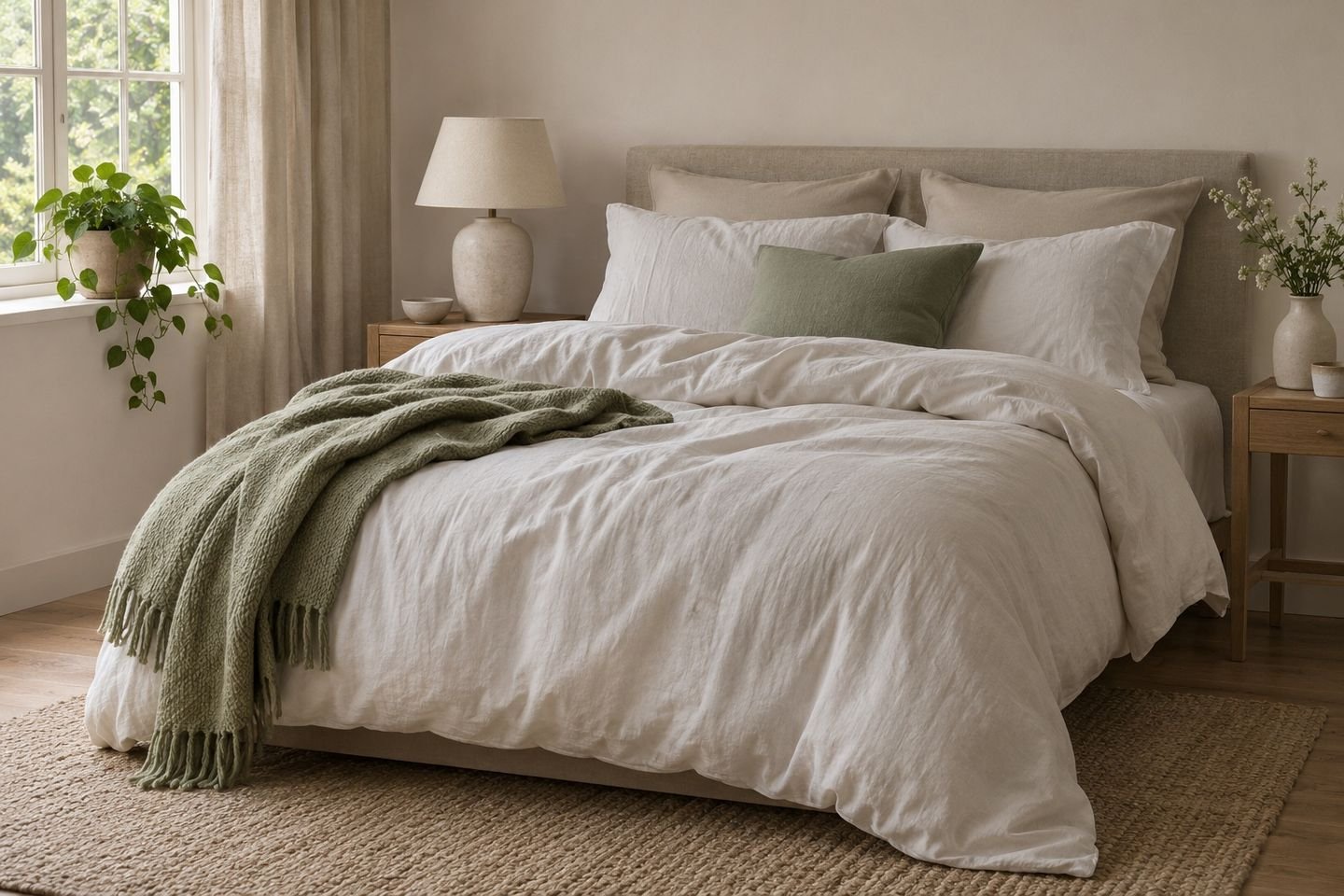
Linen looks lived-in straight away. It softens with washing, but it will never look as crisp as freshly pressed cotton, and that is part of the charm. I would choose it for a warm, airy bedroom where a few creases feel cosy, not messy.
Piglet in Bed 100% Linen Duvet Cover: This is a lovely fit for a relaxed bedroom and for people who like natural texture more than a perfectly smooth finish. Linen can feel a little crisp at first, and the price is a bigger commitment than a basic cotton set. Approx. £150–£300, depending on size.
Piglet in Bed Cotton Duvet Cover: A cotton alternative within Piglet in Bed’s relaxed colour-led style, suited to anyone who likes the brand’s look but wants a smoother fabric than linen. It won’t have linen’s distinctive texture, and colour choices can vary by season. Approx. £100–£200, depending on size.
Cheap and cheerful: Dunelm
Spilled tea on the old cover? Refreshing a spare room? Spending less makes sense here. Dunelm’s ranges cover simple everyday cotton and easy-care blends. Check the listing for what is included, since sets and single covers are not always the same thing.
Dunelm 100% Cotton Duvet Cover and Pillowcase Set: A straightforward cotton set for everyday use, particularly handy when you want matching pillowcases without piecing together separate items. Cotton can crease after washing, so expect a less pristine finish unless you iron it. Approx. £20–£60, depending on size and range.
Dunelm Easy Care Polycotton Duvet Cover and Pillowcase Set: A practical option for a busy household, student room or bed that needs frequent changes. The blend is usually easier to care for than crisp cotton, but it won’t feel as natural or breathable as a 100% cotton cover. Approx. £10–£35, depending on size and design.
Dunelm Hotel Collection 100% Cotton Duvet Cover and Pillowcase Set: A smart-looking cotton choice for shoppers aiming for a cleaner, more tailored bed without spending at luxury-brand levels. It’s still cotton, so creases can appear; a quick shake straight from the wash helps. Approx. £25–£70, depending on size.
A guest room that feels like a hotel
Guest bedding has a small job with a big payoff. Visitors should feel welcome, and you should not inherit a complicated care routine. White or pale neutrals look crisp. Washable cotton is sensible when guests come and go. One of the cotton picks above can do the job, and this extra option leans toward a softer, more classic look.
For a smooth, polished finish, start with Egyptian cotton or a cotton sateen style. For a softer, unbuttoned look, I would go linen. On a tight budget for the spare room, an easy-care Dunelm set is a sensible place to start. Pick the cover that suits your sleep, your room and your washing routine, not the one that simply photographs well.
Ad: we may earn a commission when you buy through links in this article, at no extra cost to you. We choose what we cover on our own.
Frequently Asked Questions
Is linen or cotton better for a duvet cover?
It depends on the look you want. Cotton is smoother and crisper, linen is textured and relaxed, and it softens with every wash.
What is the difference between percale and sateen?
Percale is a plain weave that feels crisp and cool. Sateen feels smoother and slightly glossy.
Is polycotton a good choice for a duvet cover?
Yes, if you want easy care and fewer creases. It is less breathable than 100% cotton, though.
How do I get the right duvet cover size?
Measure the duvet you already own and match it to the listed dimensions. UK sizes can differ from those sold elsewhere.