

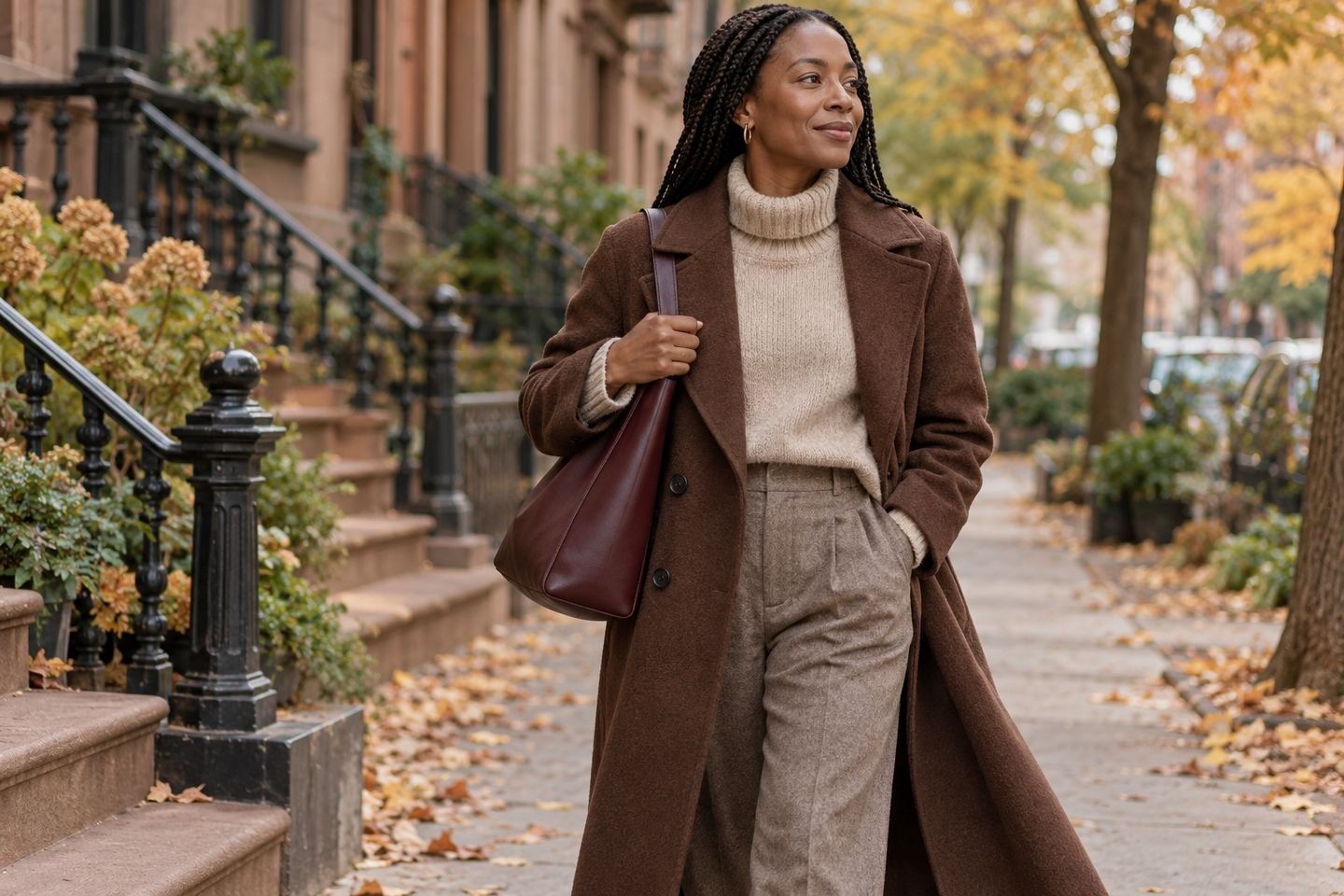

I once bought a gorgeous silky skirt in September and wore it exactly twice. The wind off the lake took care of the rest.
That skirt is why I now think about fall dressing a bit differently.
You don’t need 20 new things to make your wardrobe feel current. Choose a couple of fall fashion trends that suit your actual routine, then fill the gaps with layers you already know you will reach for. That is almost always a better buy than a closet full of one-season novelties, and honestly, it saves you from the guilt of tags still dangling in January.
What does a fall 2026 wardrobe really need?
Fall fashion trends for 2026 point toward clothes that earn their closet space: strong layers, useful textures and a little polish for the walk from the subway to the office. If you are planning women’s fall outfits in Canada, pick trends that still feel good when the forecast swings from sunny afternoon to damp, chilly commute.
Think of these 20 picks as ideas to shop across Canadian retailers such as Simons, Aritzia, Roots and Joe Fresh. They are not a checklist. I’d start with pieces you can wear three ways, then add one trend that makes your usual jeans-and-knit outfit feel new.
Relaxed structure, minus the stiffness
The most useful direction this season is clothes with shape but room to move. Textured knits and deeper, earthy colours slip into an existing wardrobe easily. Runway ideas can shift before they reach stores (they always do), so treat these as practical cues rather than predictions carved in stone. Pick the versions that work with your life.
A relaxed blazer is the easiest way to borrow tailoring without feeling dressed for someone else’s meeting. Wear it over a fine knit or a tee. Oversized cuts can swallow a petite frame, so check sleeve and shoulder fit before you buy.
Wide-leg trousers give a simple top some presence. Try them with a shorter jacket or a knit tucked loosely at the front. In wet weather they can drag, so hem length matters if you walk a lot.
When you don’t feel like building a complicated outfit, texture does the work. A ribbed, brushed or cable-knit crewneck pairs with denim and skirts alike. Check the care label first, because delicate yarns can turn laundry day into a small project.
A fluid midi skirt looks great with a chunkier sweater and boots, a handy contrast of soft and substantial. Save it for calmer days or add opaque tights. Wind wins otherwise.
Splurge or skip?
Spend where fit, fabric and frequent wear matter most. A coat you grab five days a week deserves more thought than a seasonal colour you might tire of by November. Budget pieces are perfect for trying a trend, as long as you are honest about how often they will leave the hanger.
A wool-blend coat carries you through workdays and weekend errands. Look for room in the shoulders so a sweater fits underneath, plus a length that suits your usual outfits. Some styles need professional care, so count that in the real cost.
Dark-wash straight jeans are a reliable anchor. They dress up with a blazer and still feel like jeans at the coffee shop. Between sizes? Sit and walk in them, since a stiff waistband can spoil a good fit fast.
A merino cardigan works as a top, a mid-layer or a desk-side backup. It is lighter than a bulky sweater and still warm. The downside is pilling and delicate care, especially where a bag strap rubs.
A medium-width belt is a small, low-commitment way to make trousers or a cardigan look finished. Choose a buckle you will actually wear. Very stiff leather may need a few outings before it sits comfortably.
Layering for weather that can’t make up its mind
Fall layering in Canada has to handle more than a chilly photo moment. On a rainy Tuesday commute you might need a breathable base, a warm middle layer and an outer shell that can take some weather. Build from pieces you can remove indoors. Overheated transit is real.
A thermal top adds warmth without much bulk. Wear it under a button-up or a sweater on colder days. Some fabrics cling, so look for a cut that feels comfortable under your usual layers.
A lightweight fleece suits weekend walks and casual errands, especially when the temperature keeps changing. The zip makes it easy to shed indoors. It can look sporty, so pair it with tailored trousers for a more city-ready outfit.
A quilted vest keeps your core warm without crowding your sleeves. Try it over a hoodie or under a roomier coat. It won’t replace a proper winter jacket in deep cold, and that is fine, because it is an in-between layer.
A hooded rain shell is a sensible essential when the forecast gets messy. A packable one fits in a tote, which I appreciate after an unexpectedly bright morning. By itself it may not feel warm, so layer it over fleece or a knit.
Little things, big difference
Accessories make familiar clothes feel seasonal without asking you to replace everything. Focus on comfort first: warm ears, dry feet and a scarf that doesn’t itch. A trend should work on an actual walk, not only in a mirror.
A ribbed knit tuque is an easy add for brisk mornings. Neutrals go with nearly everything, while a bright colour can wake up a dark coat. Watch for scratchy yarn if your skin is sensitive.
An oversized scarf doubles as a layer when the temperature drops. Drape it over a coat or tuck it into the collar. Bulk can get awkward under a snug jacket, so check how it sits with your outerwear.
Block-heel ankle boots feel a touch more polished than sneakers while staying manageable for a short walk. Look for a grippy sole if your route includes wet sidewalks. Some leather needs breaking in, so don’t make the first wear an all-day one.
Lug-sole boots bring sturdier footing and work with straight jeans or a midi skirt. They are a good pick for the slushy shoulders of the season. Heavier soles can feel clunky if you prefer a light shoe.
Capsule, not uniform
A capsule isn’t a strict uniform. It is a handful of pieces that cooperate, so getting dressed takes less brainpower before coffee. Start with your real week: office days, errands, dinners, walks. Then choose a palette that lets most pieces mix without much planning.
A cotton button-down gives you plenty of outfit mileage. Wear it open over a tee, tucked into trousers or under a cardigan. An oversized cut can bunch under fitted knits, so try your usual layers together before committing.
A striped long-sleeve tee brings a little pattern without demanding a new colour scheme. It works beneath a blazer or alone with denim. Thin cotton may need another layer once it turns cold.
A compact crossbody keeps your hands free on transit and during errands. Pick an adjustable strap that sits comfortably over a coat. Smaller bags look neat, but they won’t hold every just-in-case item you have accumulated.
Cushioned loafers are a useful alternative to boots on dry, mild days. They give jeans or trousers a tidier finish without a heel. In heavy rain they fall short, so keep a weather-ready pair by the door.
Which two ideas will you try first?
My vote: the rain shell and the dark-wash jeans. Boring, yes. But I’d rather be dry and well-dressed than trendy and soaked.
We may earn a commission when you buy through links in this article, at no extra cost to you. We choose what we cover on our own.
Frequently Asked Questions
What are the main fall fashion trends for 2026?
Relaxed tailoring, textured knits, earthy colours, wide-leg trousers and sturdy boots. Most of them work with clothes you already own.
How should I layer for a Canadian fall?
Start with a breathable base, add a warm middle layer like fleece or a cardigan, and finish with a rain shell or coat. Choose layers you can take off indoors.
Where should I spend more and where can I save?
Spend on the things you wear constantly, like a coat, jeans and boots. Save on seasonal colours and trend pieces you might tire of by November.
Do I need all 20 pieces?
No. Pick two or three trends that fit your week, then fill gaps with layers you know you will wear.