

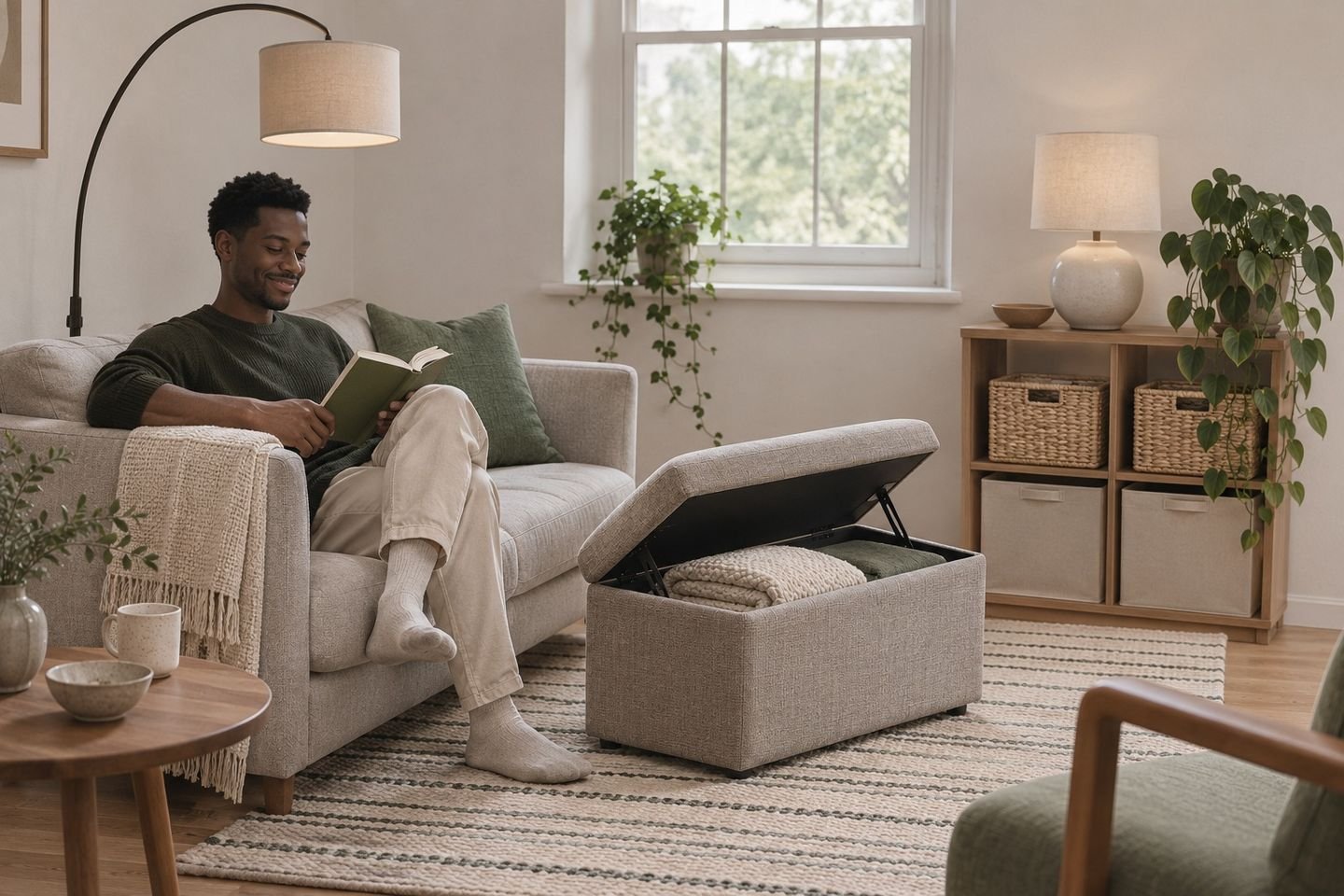

The sofa fit. The coffee table did not, because it blocked the only path to the kitchen.
That one detail is where most small living room ideas begin, and it tells you what the whole job is about. Editing beats squeezing in one more clever thing. Start with the path you walk every day, then build the seating zone around it. A rug, a lamp or an ottoman should make the room easier to use, and if it adds one more item to work around, it has to go. In a studio, clear zones and hidden storage can make the same square footage feel far more settled.
Why does a small room feel crowded?
Usually it’s the walkways, not the amount of stuff.
The goal isn’t to make the room look empty. It’s to make the useful parts feel intentional, so keep paths clear, choose furniture that does two jobs, and don’t be afraid of a little color. I once rearranged my own living room four times in one weekend (my back still remembers) before I admitted the problem was a single oversized chair. A compact room can feel cozy rather than cramped, especially when the layout works for an ordinary Tuesday and not just a staged photo.
A rug that does the zoning for you
A rug helps a small seating area feel like a room within a room, which is handy in an open-plan apartment. Size matters. Too small, and the furniture looks as if it’s floating; too large, and the rug crowds whatever floor is left. Measure the seating zone first, then check that doors still open and you can move around comfortably. I’d rather see a simple pattern that hides everyday crumbs than a pale rug you’re nervous to walk on.
IKEA TIPHEDE rug, flatwoven, black/natural, 5’1″x7’3″: A graphic black-and-white pattern gives a small living room some definition while keeping the palette easy to mix with. It works well under a compact sofa or in a studio where the rug marks the living area. The flatwoven surface is practical, but it won’t give you the plush, cushioned feel of a thick pile rug.
Light without a side table
A floor lamp can brighten a dark corner without asking you to wedge a table beside the sofa. Look for a base that tucks close to the wall or next to a chair, and check the lamp’s height against nearby shelves. Arc lamps reach over a seating area, though the curved arm needs room overhead, so a plain upright lamp is often easier in a narrow layout. Aim the light where you read, not straight into your eyes.
IKEA HEKTAR Floor lamp, dark gray: The industrial-style shade gives this floor lamp a focused look that suits a reading chair or the end of a sofa. Its upright form makes it easier to place than a wide-arching lamp when the walkway is tight. The design has a strong, utilitarian presence, so it may feel a bit heavy in a room built around delicate or very light furnishings.
IKEA LAUTERS Floor lamp, ash/white: With a wood-toned base and a fabric shade, this lamp brings a softer note to a corner that could use some warmth. It’s a good fit if you want ambient light without adding another tabletop. Keep in mind that a floor lamp still takes up a patch of floor, and this one’s softer shade won’t give the same sharply directed beam as a task lamp.
Where will the cord run? Check before you buy.
A lamp that fits perfectly can still become a trip hazard if its cable crosses the route from sofa to doorway. Small detail, big difference.
Storage that doubles as a footrest
In a tight room, a storage ottoman is a footrest, a spare perch and a hiding place for the throw blanket that otherwise lives on the sofa. Choose one that’s easy to move, and check whether the lid opens fully where you plan to park it. If it stands in for a coffee table, add a tray for drinks. Soft upholstery is a poor surface for a wobbly mug.
West Elm Andes Storage Ottoman: This upholstered ottoman offers concealed storage while giving a living room a tidy, tailored look. It suits anyone who wants a soft-edged alternative to a hard coffee table, especially in a home where the ottoman gets daily use. Upholstery can show wear or marks over time, so it’s worth thinking about your household’s spills, pets and snack habits before choosing a light fabric.
IKEA KIVIK Ottoman with storage: Designed to pair with the KIVIK sofa range, this ottoman adds a hidden spot for living-room odds and ends and can extend the sofa’s lounging area. It’s useful when you want storage that feels connected to your main seating. The catch is its size and shape: it’ll make the most sense with compatible seating, and can look bulky if you’re trying to keep the room visually airy.
The TV wall, tamed
A TV wall can do more than hold a screen. A low, closed cabinet hides cables and game controllers, while a wall-mounted screen frees the top surface for a small lamp or a framed print. Keep the furniture narrower than the wall when possible, and leave breathing room around the screen. It’s tempting to fill every inch with shelves, but a little blank wall makes the whole setup feel calmer.
IKEA BESTÅ TV bench: BESTÅ is a modular storage system that can create a low TV area with concealed storage, making it useful when remotes and devices tend to spread across the room. The clean, boxy shape also works with a range of living-room styles. Because BESTÅ is modular, check the exact configuration and dimensions before buying; different combinations won’t all fit the same wall.
IKEA LACK TV unit, black-brown, 63×14 1/8×14 1/8": This low-profile TV unit gives electronics a defined home without the visual bulk of a tall cabinet. Its simple shape suits a small room where you want the screen area to stay unfussy. Storage is limited compared with a larger media console, so it won’t solve a serious cable or equipment pile on its own.
Studio zoning without building walls
When your living room is also your dining room, or your bed is only a few steps away, let furniture suggest the boundaries. A low shelf separates zones while keeping light moving through the space. A rug under the sofa marks the lounge, and a different lighting layer makes that corner feel distinct after dark. Leave a clear path between zones, even if that means fewer pieces.
IKEA KALLAX Shelf unit, white, 30 3/8×30 3/8": This square shelf unit can hold baskets and books while acting as a low divider between a living area and another part of a studio. Its open cubbies let light pass through more easily than a solid cabinet. It still takes up floor space, though, and filling every cube with objects can make a compact room feel busy.
IKEA FRIHETEN Sleeper sectional,3 seat w/storage, Skiftebo dark gray: This sofa converts into a bed and includes storage, so it can make sense when one room has to handle lounging and overnight guests. Its sectional shape gives you a defined seating zone in a studio. It’s a substantial piece, and the chaise needs careful placement; measure the room and the route through your doorway before committing.
My view: buy the lamp and the rug first, and live with them for a month before anything bigger.
We may earn a commission when you buy through links in this article, at no extra cost to you. We choose what we cover on our own.
Frequently Asked Questions
How big should a rug be in a small living room?
Big enough that the front legs of your sofa and chairs sit on it, but small enough that you can still open doors and walk around the edges. Measure the seating zone first.
Are floor lamps good for small living rooms?
Yes. A floor lamp gives light without needing a side table. Pick an upright one for narrow layouts and check where the cord will run.
Is a storage ottoman a good coffee table substitute?
It can be. Add a tray so drinks sit steady, and make sure the lid opens fully where you plan to put it.
How do I separate zones in a studio apartment?
Use a low open shelf, a rug under the sofa and a different lighting layer. Keep a clear path between zones.