

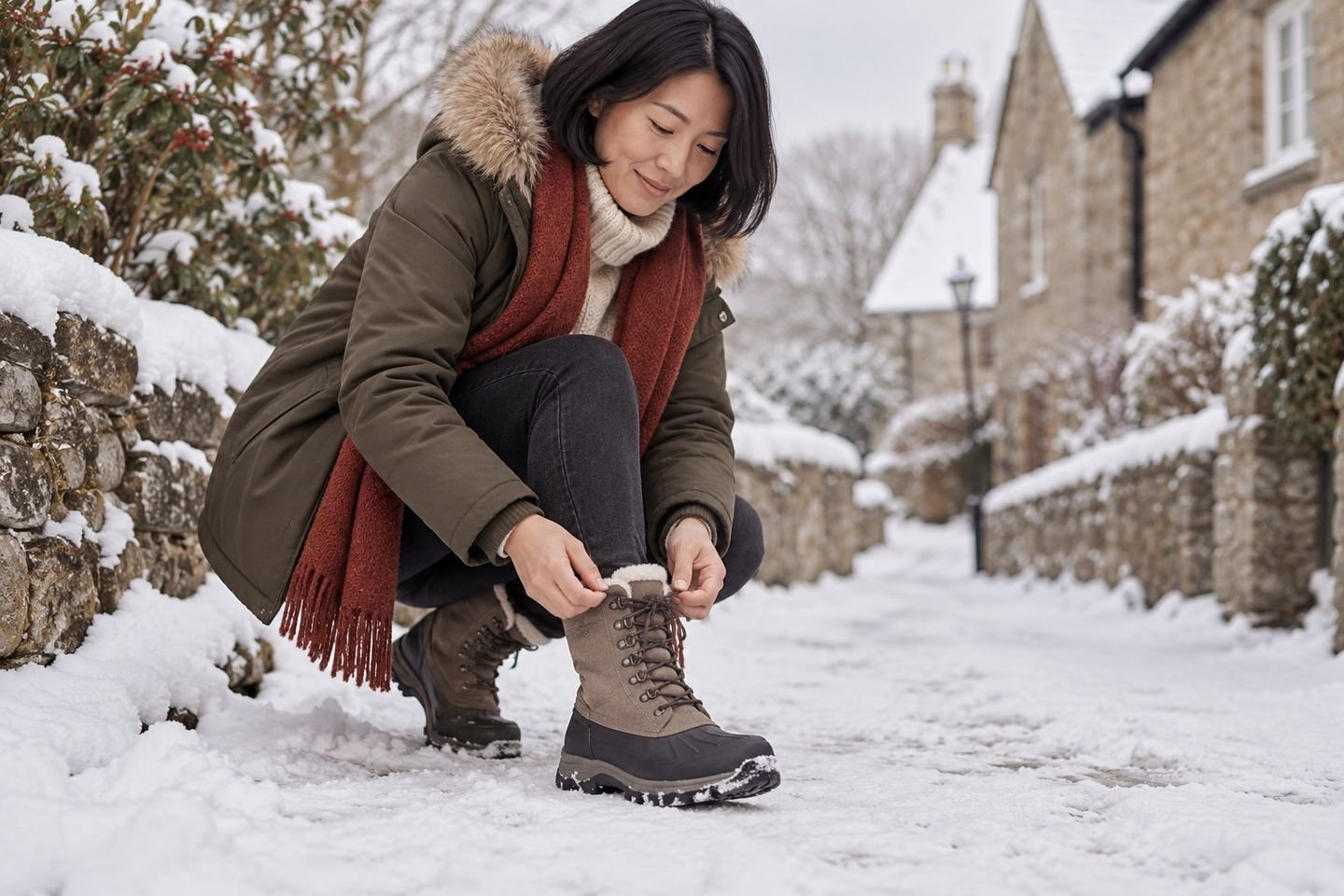

Slush ruined my favourite suede boots in about forty minutes.
That is why I care about this topic. Waterproof winter boots women can wear from a sidewalk puddle to a café table are worth their closet space, and the good ones do three things at once: keep wet snow out, grip ice, and still look like a choice you made on purpose. Finding all of that in a single boot is the hard part.
Canadian winter changes its mind fast. Your commute might begin on dry pavement and finish in ankle-deep slush, so waterproof construction matters as much as warmth does. Below are 12 style-focused options to narrow the field, from practical lace-ups to sleeker leather pairs. Prices shift by style, retailer and season, so check current Canadian pricing before you buy.
What should you look for first?
Start with the conditions you really face. If your daily route includes snowbanks, wet transit platforms or a long dog walk, you want a sealed upper, a grippy sole and room for warm socks. I would rather own a slightly less delicate boot that keeps my feet dry than a gorgeous pair that quits halfway across a parking lot.
1. Insulated waterproof lace-up boot. The dependable all-rounder. Adjustable laces let you fine-tune the fit, and the insulation helps on cold waits outside. It can look a little sporty with tailored trousers, but dark colours and a clean profile keep it easy to style. Price varies; check current CAD pricing.
2. Waterproof mid-calf snow boot. A taller shaft helps when fresh snow piles up at the curb, and a padded collar feels snug without any fuss. Good for weekend errands. The extra height can feel bulky in a packed entryway, though. Price varies; check current CAD pricing.
3. Waterproof winter Chelsea boot. Elastic side panels make it quick on, quick off, which suits school runs and short commutes. Look for a waterproof membrane or sealed construction rather than assuming leather alone will cope with slush. The streamlined shape is chic but usually covers less than a tall snow boot. Price varies; check current CAD pricing.
Boots that survive the office
Office-friendly winter boots have to work with wool trousers, skirts and the walk between the station and your door. A neat silhouette helps, but don’t trade away traction for a narrow, smooth sole (I learned that one on a icy bridge, and my coffee paid the price). For a dressier look, try a dark leather finish, a modest heel or a simple ankle shape. If your commute is especially wet, keep indoor shoes at work.
4. Waterproof leather ankle boot with a block heel. A low, stable heel adds polish without turning a slick sidewalk into an obstacle course. Check for visible tread and leather treated for wet conditions. It won’t be the warmest pick for a long outdoor wait, so save it for city days. Price varies; check current CAD pricing.
5. Waterproof quilted winter boot. Quilted panels add texture and make a simple boot look more considered with jeans or leggings. Choose a design with a sealed lower section, since decorative stitching promises nothing about waterproofing. The look is casual, which is probably a plus for everyday wear. Price varies; check current CAD pricing.
6. Waterproof wedge winter boot. A subtle wedge dresses up a winter outfit and keeps the foot steadier than a thin heel. Look for a rubber outsole with dependable tread and enough toe room for thick socks. Wedges aren’t everyone’s favourite on uneven ice, so test the feel indoors first. Price varies; check current CAD pricing.
Cheap, but not flimsy
A lower price doesn’t automatically mean a poor boot. It does make the details matter more. Check the seams, the sole grip, the return policy, and whether the boot is truly waterproof or only water-resistant. Shopping at the end of the season? Make sure there’s room for a warm sock, because a bargain that pinches is still a bad buy.
7. Lightweight waterproof packable snow boot. Handy for travel, quick errands, or stashing in the car for a surprise storm. It’s easier to carry than a heavy insulated pair, though you may want something warmer for long stretches outdoors. Price varies; check current CAD pricing.
8. Waterproof rubber winter boot with insulation. The rubber lower handles wet sidewalks, and the warm lining makes it more winter-ready than a basic rain boot. It can feel stiff at first. Check the shaft opening and try it with your usual socks. Price varies; check current CAD pricing.
9. Waterproof synthetic lace-up snow boot. Synthetic uppers keep the price approachable and usually wipe clean after a messy walk. Prioritize a sturdy sole and secure lacing, since some lighter styles have less structure than leather. Price varies; check current CAD pricing.
Sorel or La Canadienne?
Sorel and La Canadienne tend to suit different winter wardrobes. Sorel women’s boots often fit shoppers who want an outdoors-ready look for snow-heavy days, while La Canadienne is usually linked to a dressier city profile. Actually, that is only a rule of thumb. Compare the exact boot, not the label, because waterproofing, insulation, sole grip and fit all change by model.
10. Waterproof platform snow boot. A platform sole gives a contemporary shape and a little distance from cold ground. Look for deep tread and a secure heel fit. The added height may feel clumsy if you’re used to flat boots. Price varies; check current CAD pricing.
11. Waterproof suede-look winter boot. A softer finish that pairs well with denim or a knit dress. Confirm the upper has a protective waterproof treatment, because suede-look finishes vary in wet weather. It may need more careful cleaning than smooth rubber. Price varies; check current CAD pricing.
12. Waterproof insulated riding-style boot. A taller, streamlined shape works with leggings and longer coats, and the insulation helps on cold walks. Make sure the calf fits over your usual layers and that the outsole has real winter tread. Sleek doesn’t have to mean slippery. Price varies; check current CAD pricing.
Look after them or lose them
Waterproof boots still need care. Brush off grit and salt as soon as you can, then wipe the uppers with a damp cloth. Let them dry at room temperature, away from radiators, because direct heat dries out leather and damages adhesives. I know, parking wet boots by a heater feels efficient. It also shortens their life.
For leather, use a cleaner and conditioner made for the finish, then add a compatible waterproofing product if the care label allows it. Suede needs a suede brush and a spray designed for that material. Test any treatment on a hidden spot first, and check the manufacturer’s instructions, since not every boot tolerates the same product.
Does fit matter as much as care?
Yes. Try boots on later in the day, when your feet are a little fuller, and wear the socks you’d use in winter. Leave some room at the toes but avoid a loose heel that rubs. Between sizes? Read the retailer’s return rules before ordering.
My pick is simple: buy for the winter you actually have, with a grippy sole for the commute and enough warmth for the weather, not for an imaginary one where every sidewalk is perfectly cleared.
We may earn a commission when you buy through links in this article, at no extra cost to you. We choose what we cover on our own.
Frequently Asked Questions
How can I tell if a boot is waterproof or only water-resistant?
Look for a sealed or membrane-lined construction, taped seams and a rubber lower. Water-resistant boots handle light moisture, but they tend to soak through in slush.
Can I wear waterproof winter boots to the office?
Yes. A dark leather ankle boot, a Chelsea style or a low block heel looks polished, as long as the sole still has visible tread.
How should I dry wet winter boots?
Let them dry at room temperature, away from radiators. Direct heat can crack leather and weaken the glue.
What is the difference between Sorel and La Canadienne?
Sorel usually leans outdoorsy and snow-ready, while La Canadienne often has a dressier city look. Compare the specific model, since waterproofing and grip vary.


