

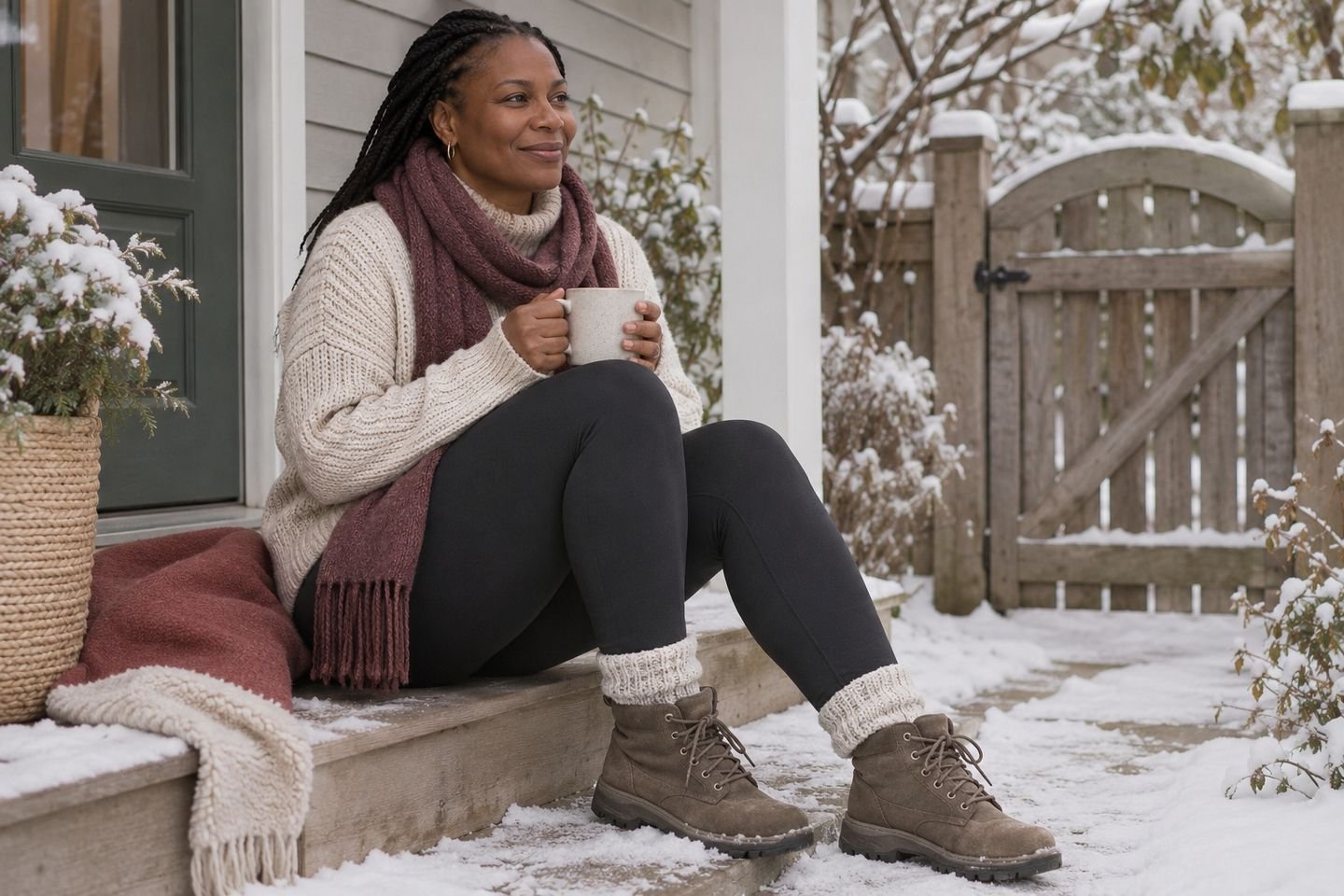

The leggings were soft enough that I assumed they were warm. They weren’t.
That mix-up is the whole reason this guide exists. Plenty of popular Canadian activewear leggings feel brushed or substantial, yet none of the four below is actually fleece-lined. Words like soft, buttery and brushed describe how a fabric feels, not how well it insulates, so for fleece-lined leggings Canada shoppers should read the fabric description carefully. If cold-weather warmth is the priority, choose a product that explicitly says it has a fleece or thermal interior, then match the insulation to how long you’ll be outside.
Fleece-lined leggings in Canada: what actually keeps you warm?
Fleece-lined leggings have a soft, raised inner surface that traps a little warmth next to your skin. Brushed ones can feel just as cozy. But brushing is a finish, not a promise of insulation for outdoor exercise. A smooth performance legging might be perfect in a studio and miserable on a windy January sidewalk.
Think about the whole outing. A dash from the parking lot needs far less insulation than 45 minutes beside an exposed waterfront, and wind, damp snow and how hard you’re working all shift what feels warm. On a rainy Tuesday commute, I’d rather throw a shell over a lighter legging than wear thick fleece and overheat on the train.
Four real pairs from brands Canadians know are below, each with an honest warmth note. I think that clarity beats pretending a soft fabric can replace a thermal layer once the temperature drops.
Prices are approximate Canadian regular prices and can change by colour, length and season. Check the current listing before buying, especially if you need a specific inseam or size.
lululemon Wunder Train High-Rise Tight 25": About $128 CAD. A training tight for gym sessions and other workouts, not a fleece-lined winter legging. It suits one close-fitting pair for indoor training and short trips outside. I wouldn’t trust it alone on a long cold run.
TNABUTTER™ Atmosphere Hi-Rise Legging: About $68 CAD. This Aritzia legging is a soft everyday pick for errands, lounging and lower-intensity movement. Under a roomy winter layer it may handle a short walk. It isn’t a dedicated thermal tight, so add insulation for longer outdoor time.
Vuori Daily Legging: About $128 CAD. A versatile everyday legging for casual wear and lighter activity, and not a purpose-built fleece-lined running tight. It makes a comfortable base under winter clothes, though the price stings if heavy insulation is your main goal.
Alo Yoga High-Waist Airlift Legging: About $138 CAD. Sleek and close-fitting, made for studio workouts and everyday outfits. It’s not what I’d reach for as my only legging on a freezing outdoor run, because the smooth, polished feel lacks the plush inside of fleece.
Run, walk or lift? Your activity sets the warmth
When you run, your body makes heat. A tight that feels perfect while you stand at the trailhead can feel too warm ten minutes in. Walking is different, since you produce less heat, so a fleece interior or a light shell can feel welcome even on a route that looks short on a map.
For thermal leggings for winter running, look for an outdoor-specific tight that clearly describes its cold-weather use and fabric. Check for a brushed or insulated inner face, a close fit that won’t bunch under a shell, and enough stretch to move freely. Also see whether it’s built to handle wind (a thin tight won’t feel comfortable on an exposed path no matter how warm the fabric is).
For commuting, decide by how long you’ll be outside and how fast you get cold. A soft, substantial legging under a long coat may do for a short errand. On a long snowy walk, real fleece lining or a base layer underneath is safer. Tiny difference in the plan; big difference in comfort.
As for gym-to-street wear, the four pairs above make more sense as everyday or training tights than as technical winter gear. Already own one? Keep using it in the cold, but pair it with a warm outer layer or a thin thermal base when the forecast turns.
Sizing and layering for minus-ten days
A winter legging should sit close without pulling hard across the knees or waist. If the fabric goes sheer when you squat or the waistband rolls, try another size or cut. Don’t size down just for a snugger feel. That leaves no room for a thin base layer and makes moving a chore.
Try your planned layers together before an outdoor workout. A thin merino or synthetic base under a regular legging adds warmth, but it can change the fit. For walking, a wind-resistant shell pant over leggings helps on exposed days. For running, keep layers light enough that you won’t feel soaked once you warm up. Minus ten feels very different in a sheltered neighbourhood than on an open bridge.
Test the outfit close to home first. A 10-minute loop shows you cold ankles, a waistband that shifts or too much heat before you commit to a longer route. Wear socks that meet the hem, too. A strip of bare skin between sock and tight gets old fast.
Keeping brushed fabric soft
Read the care label first, because blends and finishes vary. Turning leggings inside out and washing them with similar soft items limits friction from zippers and rough fabrics. Skip fabric softener if the instructions advise against it, and avoid high heat in the dryer. Heat is hard on stretchy fibres.
Never press a brushed inner surface with a hot iron. If the leggings pick up lint, a gentle lint roller is kinder than scraping at the fabric. Let them dry fully before putting them away, especially after a snowy walk or a sweaty workout, since damp gear stuffed into a gym bag can start to smell surprisingly fast.
My view: buy the legging that matches the job, and don’t expect a soft one to do a thermal tight’s work.
We may earn a commission when you buy through links in this article, at no extra cost to you. We choose what we cover on our own.
Frequently Asked Questions
Are brushed leggings the same as fleece-lined leggings?
No. Brushing is a finish that makes the inside feel soft. Fleece lining is a real raised inner layer meant to trap warmth. Check the product description for the words fleece or thermal.
Can I run outside in January wearing regular leggings?
You can for short, easy runs, but wind and damp snow make thin tights feel cold fast. For longer runs, pick an outdoor-specific tight that names its cold-weather use, or add a light shell.
How should winter leggings fit?
Close to the body, without pulling hard at the knees or waist. If the fabric goes sheer in a squat or the waistband rolls, try another size or cut.
How do I wash brushed leggings?
Read the care label first. Turn them inside out, wash with similar soft items, skip softener if the label says so, and keep the dryer heat low.