

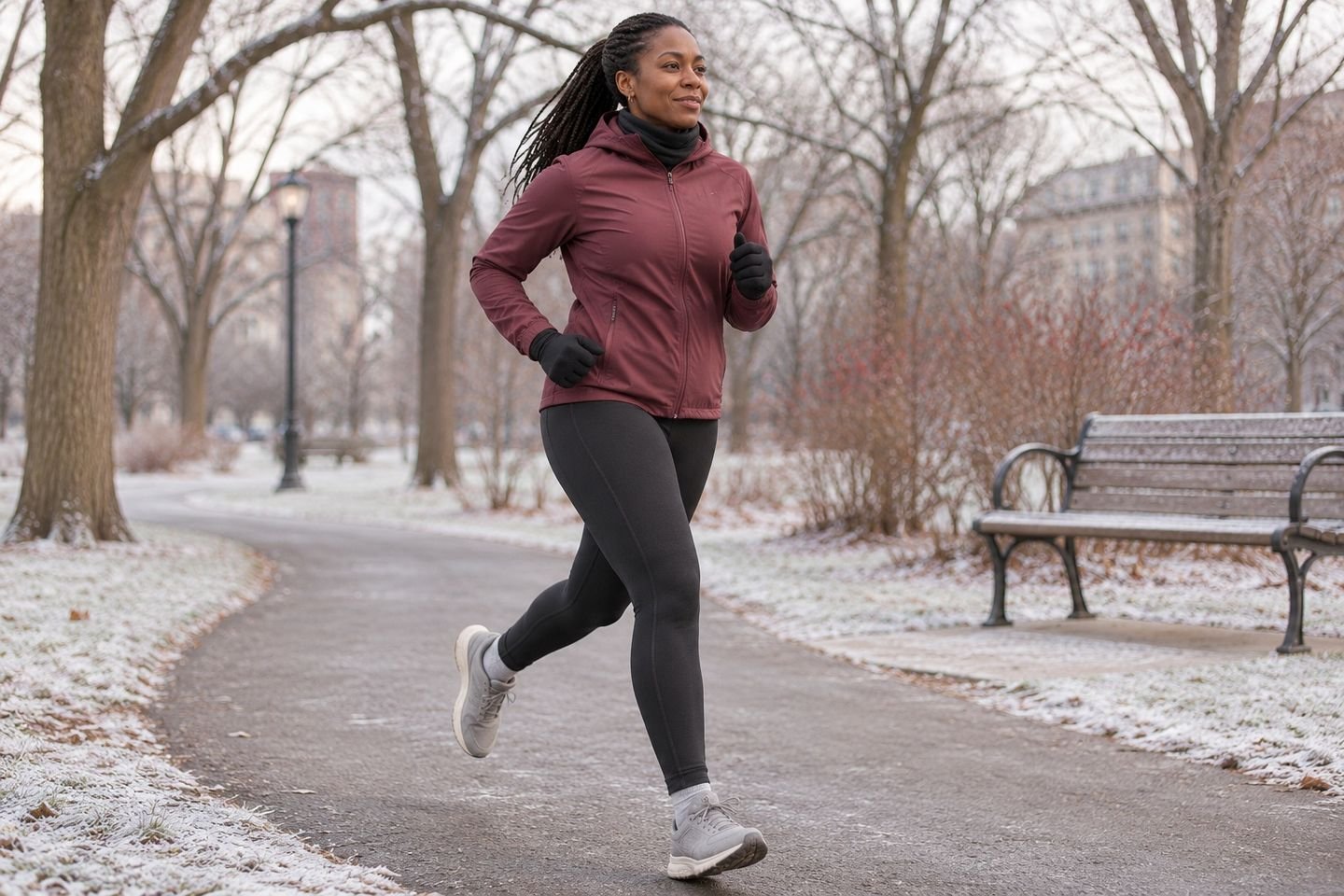

My knees were the first thing to give up on a -15°C waterfront run last January.
Not my lungs, not my patience. Just my knees, wrapped in tights that felt fine at the door and useless after ten minutes of headwind. That run is why I now think the right winter running leggings are less about stretch and more about matching the day.
Why does the cold in Canada ask so much of your tights?
A sunny 0°C jog and a windy -15°C slog need different layers. Warmth matters, and so does wind protection, and so does a fit that stays put. Cold-weather tights have to handle sweat while keeping your legs comfortable once you slow down at a crossing. A brushed or thermal interior feels warmer at the start, while wind-resistant panels help on exposed paths. On a damp day, fast-drying fabric earns its place. For icy evening runs, reflective details matter more than another decorative seam. (I used to ignore that last one. Then a car didn’t see me at a driveway.)
Below are nine options from familiar running and activewear brands. Prices are approximate Canadian regular prices, not live offers, and colours, sizing and prices can change. No single tight will feel right for every pace, route or tolerance for cold.
Think about the route you actually run.
A sheltered neighbourhood loop is a different job from an open waterfront trail, and a 20-minute jog asks far less of your clothing than a long weekend run. These picks range from lighter thermal tights to more protective ones. Check the maker’s current product page for fabric and weather details before buying.
Brushed warmth for regular winter miles
A soft brushed interior adds comfort without making tights feel like snow pants. These suit runners who want a close fit and practical details. I’d still keep a wind shell handy for a bitter headwind.
Athleta Rainier High Rise Tight: This high-rise tight is a popular cold-weather style, with a brushed feel and practical pockets. It suits runners who want a warmer everyday pair that doubles for walks. The trade-off is that a snug, brushed fit may feel too warm for hard efforts on milder days. Approximate Canadian price: $150 CAD.
Brooks Run Visible Thermal Tight: A thermal running tight with reflective details, it makes sense for early starts when daylight is scarce. The close fit works as a standalone bottom for many winter runs. Its visibility-focused styling may feel like a lot if you want plain black. Approximate Canadian price: $160 CAD.
ASICS WINTER RUN TIGHT: Designed for winter running, this pairs a close fit with details aimed at cold-weather training. Consider it if you want running-specific tights rather than general workout leggings. Check the exact version for pocket layout and insulation, since details can vary by season. Approximate Canadian price: $140 CAD.
When the wind is the real problem
Once the temperature falls well below freezing, warmth alone doesn’t fix much. Wind cuts through exposed fabric. Sweat leaves you chilled the moment you stop. For runs around -15°C and below, pick tights with more protection and think about a base layer if the fit allows. Weather tolerance varies from person to person, so treat these as part of a layering plan and not a temperature guarantee.
Craft ADV SubZ Tights 2 W: These women’s winter running tights are made for cold-weather training and feel more protective than lightweight race tights. They suit runners who head out in colder conditions and want a purpose-built option. A warmer, more substantial tight can feel restrictive or too hot during faster sessions. Approximate Canadian price: $160 CAD.
The North Face Winter Warm Pro Tight: A warm option for winter workouts, good for runners who want coverage on cold days and may wear it for other outdoor activity too. It’s a practical choice for a steady pace. Fit and features can vary between versions, so confirm current details before you order. Approximate Canadian price: $150 CAD.
Under Armour ColdGear Authentics Leggings: ColdGear is a familiar base-layer choice for adding warmth under running shorts or roomier pants. It’s best for runners who prefer layering and want a close first layer. It may not offer the weather protection or running-specific pockets of a dedicated outer tight. Approximate Canadian price: $70 CAD.
Pockets and reflective bits: worth the money?
Useful details should make a run easier, not add bulk. A rear or thigh pocket keeps a key or phone secure, but test the bounce with your own phone size. Reflective panels help drivers spot you, though they don’t replace a headlamp or a bright outer layer on dark roads.
Nike Therma-FIT One Women’s High-Waisted 7/8 Leggings: Therma-FIT fabric makes this a warmer pick for cool-weather runs, and the 7/8 length may suit runners who dislike fabric bunching at the ankle. It’s versatile for training and everyday wear. The shorter cut can leave a gap above socks on very cold days. Approximate Canadian price: $100 CAD.
New Balance Impact Run Heat Tight: Made for cooler conditions, this is a running-oriented alternative to basic leggings. It suits runners who want a dedicated pair for chilly training days. Check the current model’s pocket placement and visibility features, since those can differ between releases. Approximate Canadian price: $130 CAD.
lululemon Fast and Free High-Rise Tight 25": A lightweight running tight with a streamlined fit and pockets, it can work for milder winter runs or as a layer under weather protection. It suits runners who value a close feel and easy access to small essentials. It isn’t a heavy thermal, so it’s a poor solo choice for a windy -15°C outing. Approximate Canadian price: $128 CAD.
Getting the fit right before you cut the tags
Start with the waistband. It should stay put when you jog, squat and climb stairs, without digging in after a meal or a long run. Then check the ankle, because a small gap between tights and socks gets uncomfortable fast in cold air. If you plan to wear a base layer underneath, try both together.
Don’t automatically size up. A loose fit bunches behind the knee and lets cold air move around, while a tight one restricts movement or strains seams. Follow each brand’s size chart, especially if you’re between sizes. Tights labelled thermal still vary a lot in thickness and wind resistance.
Match your tights to the day. A brushed pair may be plenty for a calm, near-freezing run; on an exposed route, add a wind-resistant layer, warm socks and reflective outerwear. Winter running leggings are one part of staying comfortable, not a promise that every cold snap will feel pleasant.
My pick? Buy the thermal pair you’ll actually want to pull on at 6 a.m., and add a shell for the bad days.
We may earn a commission when you buy through links in this article, at no extra cost to you. We choose what we cover on our own.
Frequently Asked Questions
What temperature do I need winter running leggings for?
Many runners reach for thermal tights once it drops near 0°C. Below about -10°C, wind protection and a base layer matter more than fabric thickness alone.
Should I size up in winter running leggings?
Not automatically. Loose tights bunch behind the knee and let cold air in, so follow the brand’s size chart and try them on with any base layer you plan to wear.
Are lightweight running tights okay for a windy -15°C run?
Usually not on their own. A lightweight tight works as a layer under wind protection, but a thermal or purpose-built winter tight is safer for exposed routes.
Do reflective details replace a headlamp?
No. Reflective panels help drivers notice movement, but a headlamp or bright outer layer is still wise on dark roads.