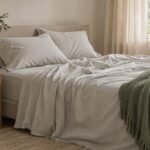

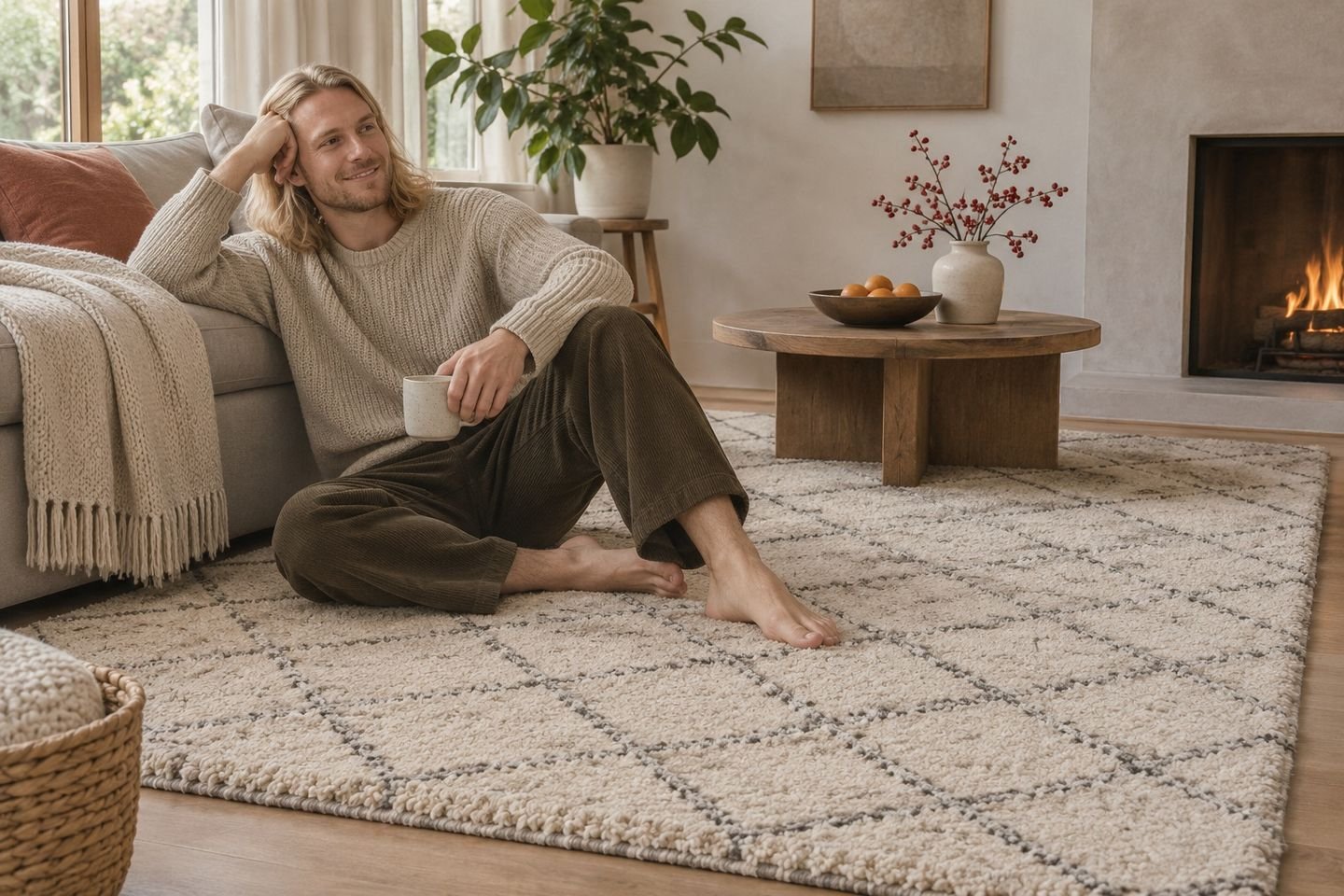

My bare feet hit the floor at 6 a.m. and I regretted it immediately.
That is the real reason rugs matter in January. A rug softens a cold floor, pulls a seating area together and still has to get along with everything else in the room. Even if the thermostat refuses to cooperate, that first step out of bed stops feeling quite so rude.
Measure first, fall in love later
Before you look at a single pattern, work out the layout. In many living rooms an 8′ × 10′ rug lets a sofa and nearby chairs connect visually, while a 5′ × 7′ rug may suit a compact apartment or a smaller conversation corner. Those are starting points, not rules. Stick painter’s tape on the floor where the edges would land, then walk around it, look at where the sofa and coffee table sit, and see whether the paths to doors still feel open. I did this in my own place after nearly ordering a rug that would have looked like a postage stamp (my sofa is bigger than I remembered).
A common arrangement puts the front legs of the sofa and chairs on the rug and leaves the back legs off. The group feels connected without the rug needing to cover the whole room. Want a more generous look? Put every leg on it, but check that the edges don’t crowd doorways or block vents.
Don’t forget the coffee table.
It should sit comfortably inside the rug’s footprint, with room around it for people to walk and stretch out. Too small a rug and the furniture looks like it’s floating nearby. A tape outline costs almost nothing, and guessing costs a lot more.
Cheap rugs that still do the job
If you want more softness without making the rug the biggest expense in the room, start with a simple weave or a low pile. These suit busy spaces where chairs get dragged around and crumbs appear from nowhere. Check the size options first. A low price on a small rug won’t help if you need to anchor a full sofa-and-chair setup. Prices below depend on size and can change, so treat them as starting points rather than a promise at checkout.
IKEA LOHALS Rug, flatwoven, natural: This natural-fiber flatweave brings an easy, casual texture and works with wood furniture or relaxed neutral decor. IKEA lists the 5’7″ × 7’10” size at about $99.99. The flatter weave is practical when you move furniture, but it won’t feel plush on a cold floor.
IKEA TIPHEDE Rug, flatwoven, natural/black: A simple stripe gives this cotton rug some definition without taking over. The listed price for the 5’3″ × 7’7″ size is about $49.99. It’s a sensible pick for a small seating zone or a layered look, though cotton has less cushion than a thick pile.
nuLOOM Moroccan Blythe Area Rug: The geometric pattern adds visual warmth and pairs easily with solid-colored furniture. Prices vary by size; smaller versions are commonly listed around $50, with larger ones costing more. The low pile slides under furniture easily, but you won’t get that sink-in, fireside feel.
When the room feels bare: texture
In a room that looks a bit empty by January, texture can do as much as color. A thicker or more detailed rug makes the seating area feel finished. It may also need extra attention when you vacuum or drag a dining chair across it. These three suit people who want a visible pattern or a softer look under the coffee table.
nuLOOM Rigo Hand Woven Jute Area Rug: The handwoven jute has a natural, textured look for rustic, coastal or pared-back rooms. Prices shift by size, with smaller versions often starting around $60. Jute adds warmth to the eye, but it isn’t the softest material for bare feet, and spills need quick care.
Safavieh Adirondack Collection ADR109A Area Rug: A distressed traditional pattern gives this rug a lived-in look that works with classic and more modern furniture. Prices vary by size and seller; smaller options are often listed around $70. The low-profile synthetic build is easier to live with than a deep shag, though it won’t match a plush wool rug.
Ruggable Kamran Coral Rug: This traditional-inspired pattern brings richer color and a more collected look. Prices vary by size and configuration, with a 5′ × 7′ option commonly listed around $299. The washable system helps households that expect spills. The upfront cost is higher than a basic area rug, and you’ll need to follow the care directions for the exact version you buy.
Wool, and whether you need it
Wool is worth a look when comfort and natural texture matter more than the lowest price. It feels warm underfoot and adds depth, but wool rugs usually cost more and can shed, especially when new. Read the listed material and care instructions rather than assuming every rug with a wool-like look is made from wool.
Notice that the six rugs above aren’t all wool? That’s on purpose.
A cozy living room doesn’t require a premium fiber. If you do go with wool, think about how much traffic the room gets and whether you’re happy with regular vacuuming and fast spill cleanup. A pale wool rug under a snack-loving family is a lifestyle choice, frankly.
Don’t skip the pad
A rug pad keeps an area rug in place, adds a little cushion and protects the floor beneath. Choose one made for your floor type and rug material, because hardwood, vinyl and carpet can have different requirements. Check the rug maker’s care guidance too, since some materials or backings need a specific kind of pad.
Trim the pad so it sits slightly inside the rug’s edges instead of peeking out. It looks tidier and keeps a vacuum from catching it. With a thicker rug, go for a thinner pad so the combination doesn’t get bulky under doors or furniture.
My pick for most homes is the rug that fits your layout, your routine and your tolerance for cold feet, not the one with the most dramatic product photo. Measure, decide how much softness you want, then compare care needs and price at your size. A modest flatweave with a good pad can feel just right, and a washable patterned rug makes more sense when spills are part of daily life.
We may earn a commission when you buy through links in this article, at no extra cost to you. We choose what we cover on our own.
Frequently Asked Questions
What size area rug is best for a living room?
An 8′ x 10′ rug suits many living rooms with a sofa and chairs, while a 5′ x 7′ rug fits compact apartments or smaller conversation areas. Tape the edges on the floor first to check.
Do I need a rug pad under a living room rug?
Usually yes. A pad keeps the rug from sliding, adds light cushion and protects the floor. Pick one made for your floor type and your rug’s material.
Is a wool rug worth the extra money?
If you want warmth underfoot and natural texture, yes. Expect a higher price and some shedding when it is new, and check the care instructions before buying.
Are flatweave rugs warm enough for winter?
They add some comfort, but a flatweave will not feel plush. A good pad underneath helps a little with cushion.