

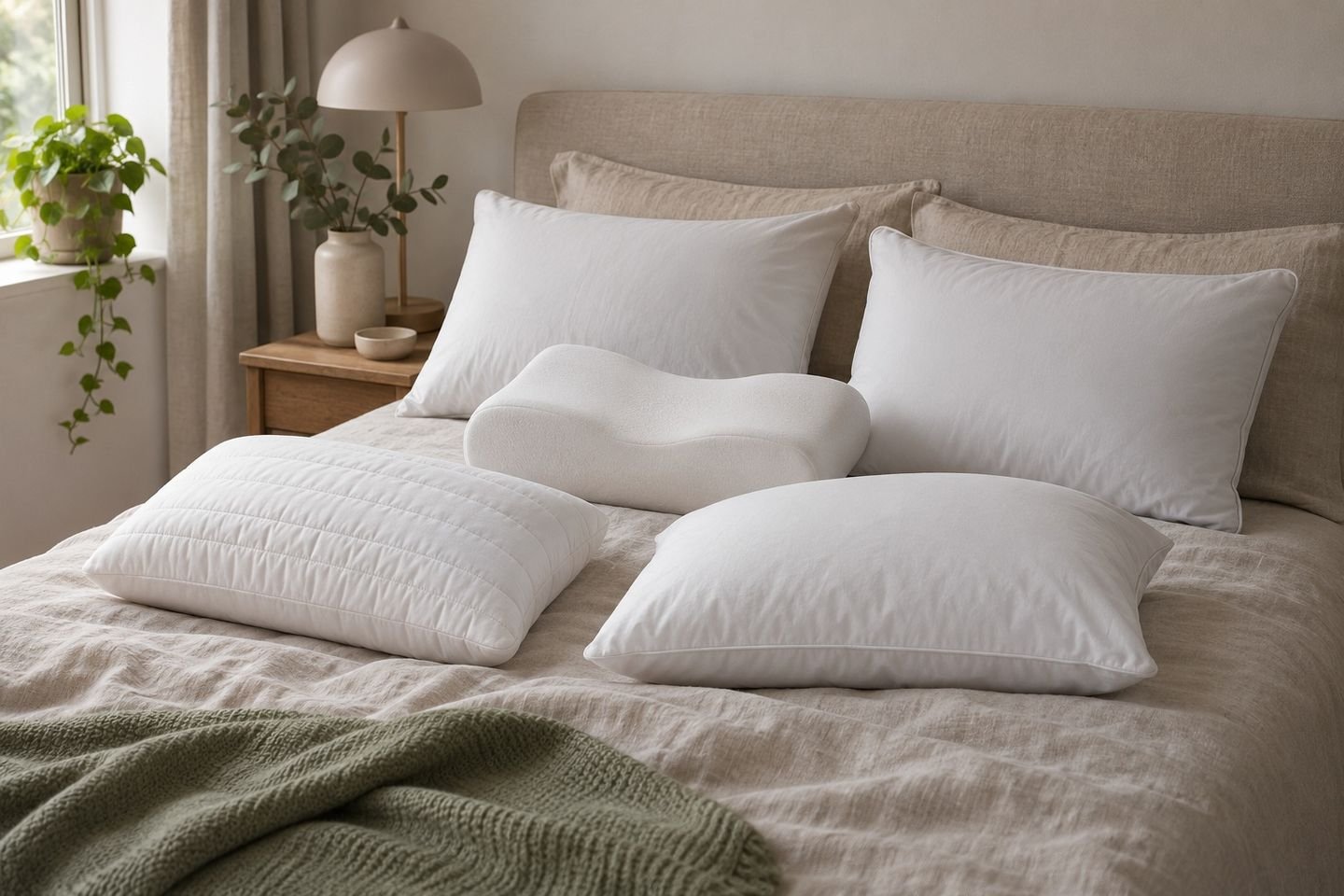

Here is the number that matters: the gap between your ear and the mattress when you lie on your side.
A pillow has to fill that gap, no more and no less. Too little and your neck sags towards the bed. Too much and it tips up towards the ceiling. A lovely cover can’t rescue a pillow that’s the wrong shape for you, and I learned that the hard way after buying one purely because it looked good in the photos. My shoulder ached for a week. (The cover was gorgeous, mind you.)
There’s no single perfect pillow for every side sleeper. Shoulder width, mattress feel and whether you prefer a mouldable or springy fill all play a part. Below are six named options across memory foam and fibre at different prices, then a simple way to narrow things down. Prices are indicative UK prices and can change, so check the current listing before buying.
How high should a side sleeper’s pillow actually be?
Side sleeping usually leaves a bigger gap between head and mattress than lying on your back does. Loft helps support that gap, but higher isn’t automatically better. Your head should feel broadly in line with your spine, neither pushed up nor dipping down. Test any pillow on your own mattress, because a softer mattress lets your shoulder sink further in and changes how much height you need.
Firmness is about how much the pillow gives under your head, not how tall it looks on the bed. A firmer, deeper pillow may suit broader shoulders, while a narrower frame or softer mattress might want less height. Do you flip onto your back at some point in the night?
If so, think about that. A heavily shaped pillow can feel brilliant on your side and awkward the moment you roll over.
Persistent, severe or worsening neck discomfort deserves a conversation with a healthcare professional, not just a new pillow. When you shop, check whether the fill can be adjusted, whether the cover washes and what the returns policy allows. Those details matter once the pillow is on your bed, not while it’s sitting in a product photo.
Memory foam that holds its shape
Memory foam suits people who like a pillow that stays put around the head and neck. It feels more substantial than loose fibre, though some sleepers find it too warm or too firm. Here are three to compare.
TEMPUR Original Pillow: This shaped pillow is designed to support the head and neck, so it may suit side sleepers who want a defined contour rather than a fluffy, squashable feel. It’s premium-priced, with typical UK prices around £99 depending on size. The honest drawback: the shape takes getting used to, and it’s harder to scrunch into a new position than a conventional pillow.
Panda Memory Foam Bamboo Pillow: A memory-foam option with a bamboo-derived cover, good for anyone who wants a moulded feel and a removable cover. It’s often priced around £50–£60 in the UK, though the exact price varies. One snag is that a single fixed fill height won’t suit every shoulder width, so check the dimensions and your preferred loft first.
Simba Hybrid Pillow: Mixing foam with adjustable fill, this is a flexible pick if you’re unsure how much height you need. You can tweak the fill until your side-sleeping position feels natural. Its typical UK price is around £109, which is a bigger spend, and adjusting it may take a little trial and error.
Fibre, the familiar choice
Fibre pillows feel familiar and are easy to plump or fold under your head. They suit you if foam feels too dense, or if you’d rather not stretch the budget. The trade-off is flattening with use, so regular fluffing helps.
Silentnight Airmax Pillow: A practical fibre pillow if you want a familiar, washable-style everyday option from a widely available UK bedding brand. A typical price is about £15 for a single pillow, though packs and retailer pricing differ. It may feel less substantial than a high-loft foam pillow, so broader-shouldered side sleepers should check the height carefully.
Silentnight Deep Sleep Pillow: Another fibre choice, for sleepers who like a fuller, softer feel without stepping into premium foam pricing. Expect a typical UK price around £20, subject to retailer and pack size. Its softer character may compress under your head more than a firm pillow, which matters if you need a stable, taller feel on your side.
Cheap and cheerful, under £25
Replacing an old pillow for a spare room? Want to try a different firmness without spending much? A budget option makes sense. Just be realistic. A lower price doesn’t guarantee the height or support your body needs, and the cheapest pillow may need replacing sooner once it loses its shape.
Before checkout, look at the exact size and whether the price covers one pillow or a pair. Product names and ranges change, and a multi-pack can make the displayed price look lower per pillow than it really is. Compare stated firmness and care instructions rather than choosing on price alone.
When a pillow has had its day
Follow the care label first. Some covers can go in the washing machine, while a foam core often needs different care and shouldn’t be treated like a washable fibre pillow. A washable protector keeps sweat and dust off the pillow itself, so wash it as often as the label recommends, especially in warm weather.
Shake and air fibre pillows regularly, but don’t assume a quick fluff fixes one that’s permanently lumpy or flat. If yours stays compressed after you fold it, smells musty despite proper care, or leaves your neck poorly supported night after night, it may be time to replace it. No magic date suits every fill and sleeper.
My view: start with how you actually sleep, then match loft and firmness to your shoulder and mattress. The tallest or priciest pillow is rarely the winner. If you’re torn between two feels, pick the one with an adjustable fill or a generous returns policy and let your own neck decide.
Ad: we may earn a commission when you buy through links in this article, at no extra cost to you. We choose what we cover on our own.
Frequently Asked Questions
What loft is best for a side sleeper?
Enough to fill the gap between shoulder and head so your neck stays roughly in line with your spine. Broader shoulders or a firmer mattress usually need more height.
Is memory foam better than fibre for side sleeping?
Not always. Foam holds its shape and suits people who want a defined contour, while fibre is easier to scrunch and often cheaper. It comes down to feel and budget.
How do I know when to replace my pillow?
If it stays flat after folding, smells musty despite proper care, or leaves your neck poorly supported night after night, replace it. There is no fixed date.
Can I wash a memory foam pillow?
Usually not like a fibre one. Check the care label, as covers may be machine washable while foam cores often need different care.