

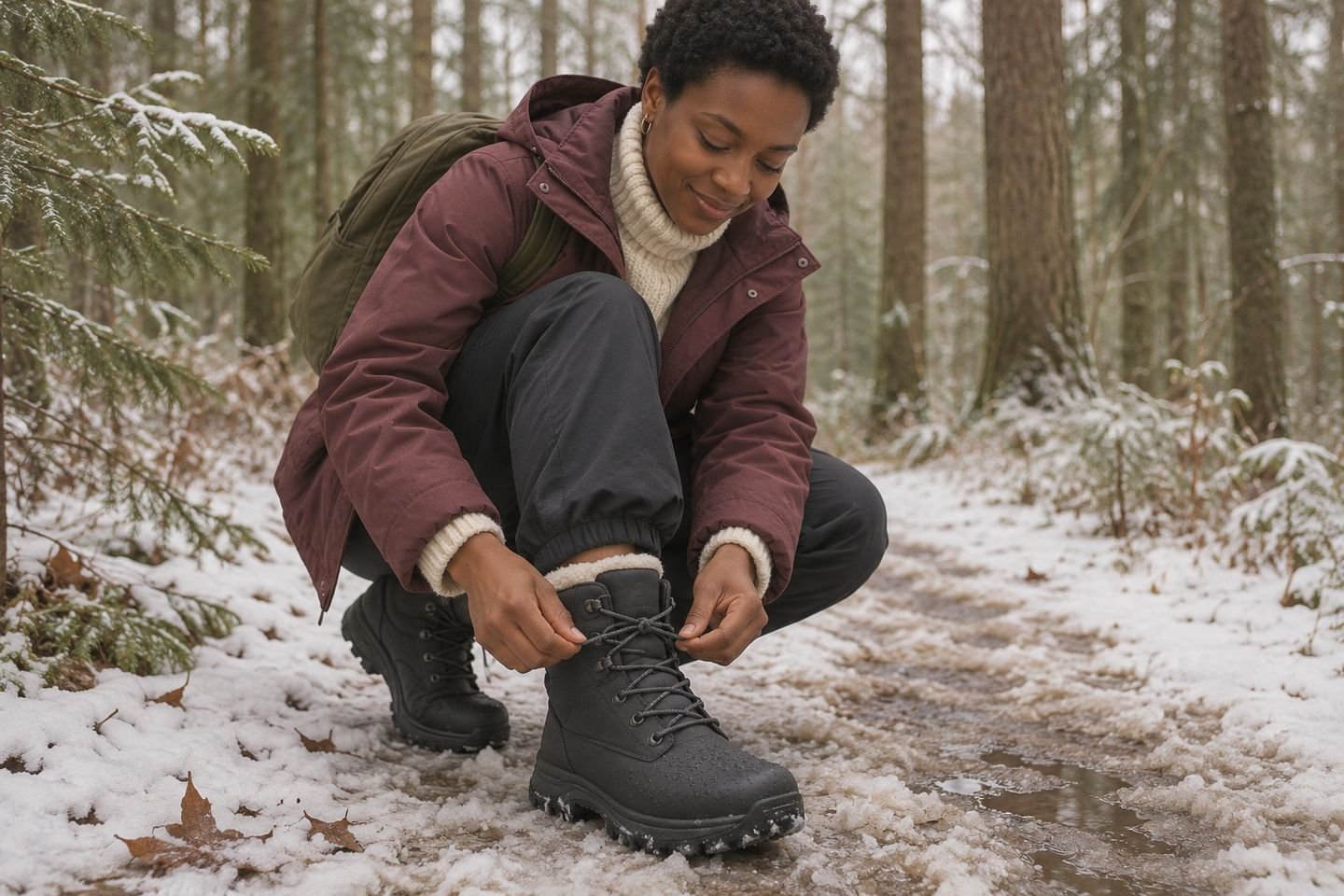

Nobody warns you about the bus stop.
Waterproof winter boots earn their keep on the walk from a snowy parking lot to a slushy curb, and the best pair for that walk is not the best pair for a foot of fresh powder. Pick for the winter you actually live in, not an imaginary blizzard every single day. Choose height and insulation for your usual weather, then check fit and care before you commit. A short waterproof ankle boot suits a wet city commute, while deeper snow calls for more coverage.
Canadian winter rarely sticks to one forecast. A morning can start with powder, turn into roadside slush by lunch, then freeze into slick patches on the way home. The nine boots below cover different levels of warmth, height and everyday polish. One catch: waterproof construction helps block water, but it can’t make an icy sole grippy on every surface.
What should you look at before buying?
Start with the messiest conditions you really face. For deep snow, look for a taller shaft and a closure that keeps snow from sneaking in. On wet sidewalks, a waterproof lower and a comfortable fit matter more than height. Try boots with the socks you plan to wear, because cramped toes get cold fast. I once sized down for a sleeker look and spent an entire January regretting it (my toes still remember). Leave a little room for your foot to move.
Sorel Caribou Boot: This classic, substantial boot suits long walks through deep snow and the kind of driveway clearing that turns into a half-hour job. Its tall profile and removable inner boot are practical when warmth and coverage come first. The trade-off is bulk. It can feel like a lot of boot for a quick dash to the corner store.
Sorel Joan Of Arctic Boot: A taller, winter-ready choice for snowy days when you want a more styled silhouette than a traditional snow boot. It’s suited to errands and cold-weather outings where coverage matters. Its height and structure can feel cumbersome if you prefer a light, flexible boot for commuting.
Kamik Nation Plus: This insulated boot is aimed at cold, snowy conditions and suits outdoor chores or winter walks. The straightforward design puts warmth and coverage ahead of a dressy look. It’s a bigger, more utilitarian pick, so it may be too much for mostly indoor days and short pavement-only trips.
Slush is its own problem
Slush splashes up around hems, so a waterproof lower and a secure fit make a noticeable difference on a rainy Tuesday commute. Ankle-height boots are easier to wear with everyday clothes, though you’ll want to avoid wading through deeper snow. Check the maker’s care instructions, too, since leather and textile uppers don’t always need the same treatment.
Sorel Out N About III Classic Waterproof: This casual, waterproof lace-up makes sense for wet sidewalks and everyday errands. Its lower profile is easier to pair with jeans than a tall snow boot, and it suits milder winter conditions. The shorter height leaves less protection when snow piles up above the ankle.
Sorel Explorer III Joan Cozy: A city-friendly option for cold-weather walking, with a more streamlined look than a heavy-duty snow boot. It fits commutes and casual outings where you want warmth without a tall shaft. Its fashion-leaning shape isn’t the one I’d choose for long stretches in deep snow.
Kamik Sienna 2: This waterproof ankle boot suits wet streets and everyday winter wear when you want a shorter, easy-to-style shape. It’s a practical option for quick walks and errands in slush. The lower cut has a clear limit. Snow gets in more easily than it would with a tall boot.
When your feet need more warmth
Some days call for a boot you can wear outside for longer than the walk between car and door. Insulation and a higher cut help when you’re waiting for transit, walking the dog or hanging around a snowy neighbourhood. Still, warmth is personal. If your feet run hot, a heavily insulated boot can feel stuffy on a packed commute or in a heated shop.
Sorel Whitney II Plus: This insulated, waterproof winter boot suits cold-weather walks and snowy errands, with a lighter look than a traditional tall snow boot. It’s a useful middle ground if you want warmth and practical coverage without a very rugged silhouette. The snug, sporty shape may not work with thicker socks or wider feet, so check the fit carefully.
Kamik Momentum 3: Made for winter conditions, this insulated style works for snow days and everyday outdoor use when you want more warmth than a simple ankle boot gives. Its casual design is easy to wear for errands. It’s less suited to outfits that call for a polished leather look.
Kamik Snowgem: This winter boot is a practical choice for cold, snowy routines, especially if your day includes walking outdoors rather than only dashing between buildings. Its winter-focused look and coverage help in rough weather. The trade-off is versatility, since it may look and feel too warm for milder, wet-only days.
Boots need babysitting too
Waterproof boots still need a little attention. Brush off dried salt and grit with a soft brush, then wipe away slush before it sits on the upper. Let wet boots dry at room temperature, away from radiators and direct heat, because fast drying can be hard on materials and adhesives. If the boot has a removable liner, follow the maker’s directions before washing or drying it.
Use only a care product that matches the boot’s material and the brand’s instructions. A spray meant for fabric may not suit leather, and a conditioner can change the look of some finishes. When water stops beading on an upper that’s meant to be treated, it may be time to refresh its protection. Salt marks? A damp cloth and patience usually beat a harsh household cleaner.
Fit deserves one last check. Try both boots, walk around, and wear the socks you’d use on a cold day. Your toes should have room, your heel shouldn’t slip much, and nothing should pinch when you bend your foot. For icy routes, consider traction aids that fit your footwear, because even waterproof winter boots can’t promise a sure step on glare ice.
So which winter are you actually dressing for?
My pick, for what it’s worth: buy for the slushy Tuesday, not the storm of the century. You’ll wear them far more often.
We may earn a commission when you buy through links in this article, at no extra cost to you. We choose what we cover on our own.
Frequently Asked Questions
What height of waterproof winter boot do I need?
It depends on your conditions. Deep snow calls for a taller shaft, while wet sidewalks and slush are fine with an ankle-height boot that has a waterproof lower.
How should waterproof winter boots fit?
Try them on with your winter socks. Your toes need room, your heel shouldn’t slip much, and nothing should pinch when you bend your foot.
How do I dry wet winter boots?
Let them dry at room temperature, away from radiators and direct heat. Fast drying can damage materials and adhesives. Remove liners if the maker says you can.
Are waterproof boots good on ice?
Not by themselves. Waterproofing keeps water out but doesn’t create grip, so consider traction aids that fit your boots for icy routes.
How do I remove salt marks from boots?
Start with a damp cloth and some patience. Brush off dried salt first. A harsh household cleaner is a poor first move.